From the solo sailors of the Vendée Globe to the amateur crews of the Clipper Race, there are now more round-the-world sailing events than ever before. While they all involve circumnavigating the globe, the races differ dramatically in terms of crew numbers, boat types, stopovers and even the direction they sail.
Here’s a guide to some of the world’s best-known ocean races.
Vendée Globe
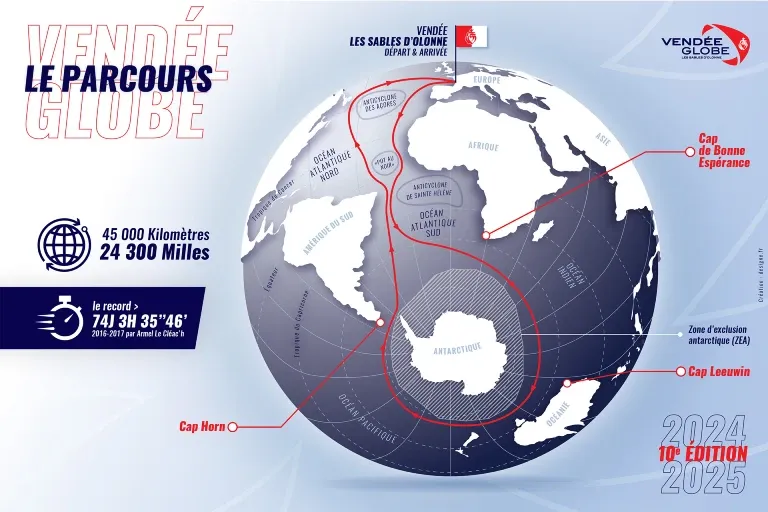
Often described as the “Everest of the Seas”, the Vendée Globe is regarded as the ultimate solo sailing challenge.
Sailors race alone aboard high-performance IMOCA 60 yachts, sailing non-stop and without outside assistance around the world. The route follows the traditional eastabout course through the Southern Ocean, passing the great capes of Good Hope, Leeuwin and Horn before returning to France.
Format: Solo, non-stop, no assistance
Direction: Eastabout
Stopovers: None
The Ocean Race
Formerly known as the Whitbread Round the World Race and later the Volvo Ocean Race, The Ocean Race is the premier fully crewed round-the-world event.
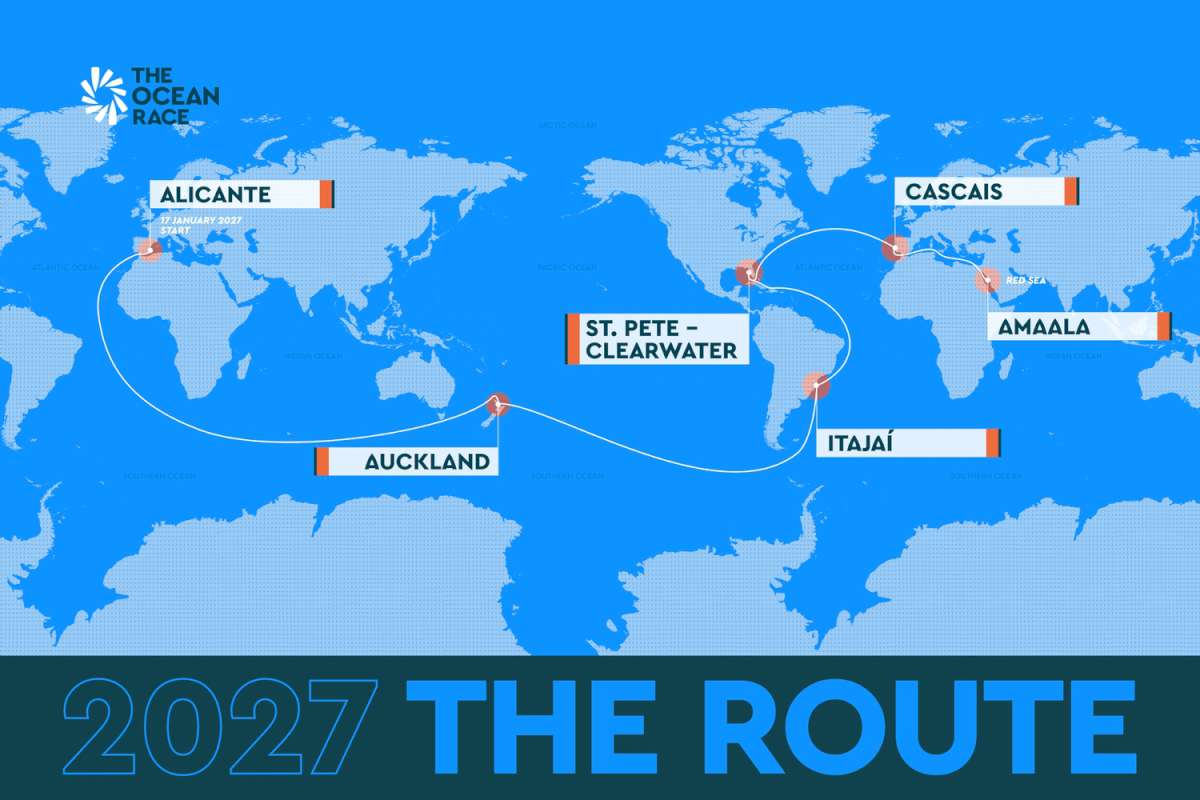
Teams race in stages between international ports, combining offshore endurance with tactical coastal racing. Modern editions feature IMOCA yachts and attract some of the world’s best professional sailors.
Format: Fully crewed
Direction: Eastabout
Stopovers: Multiple
Ocean Globe Race
The Ocean Globe Race celebrates the spirit of the original 1973 Whitbread Round the World Race.
Competitors sail classic production yachts from a bygone era, relying on traditional navigation and seamanship rather than the latest technology. The race follows a fully crewed format with stopovers around the world.
Format: Fully crewed classic yachts
Direction: Eastabout
Stopovers: Multiple
Golden Globe Race
If the Vendée Globe is the pinnacle of modern ocean racing, the Golden Globe Race is its traditional counterpart.
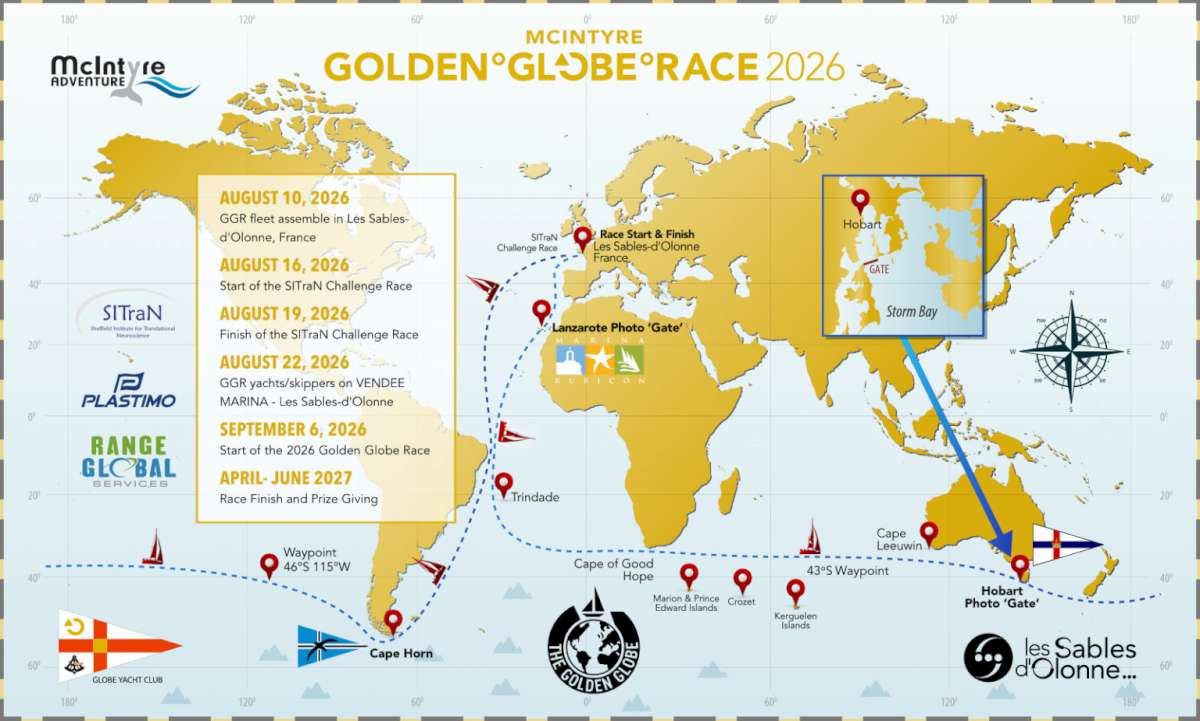
Sailors compete alone, non-stop and without modern technology, recreating the challenge faced by Sir Robin Knox-Johnston during the first solo circumnavigation in 1968-69. Competitors navigate using sextants, paper charts and period equipment.
Format: Solo, non-stop
Direction: Eastabout via the Five Great Capes
Stopovers: None
Clipper Round the World Yacht Race
The Clipper Race is unique because the majority of participants are amateur sailors rather than professionals.
Crews race identical yachts around the world in stages, passing through major international ports and typically transiting the Panama Canal. Professional skippers lead each team, allowing sailors from all walks of life to experience ocean racing on a global scale.
Format: Crewed, largely amateur participants
Direction: Eastabout
Stopovers: Multiple
Mini Globe Race
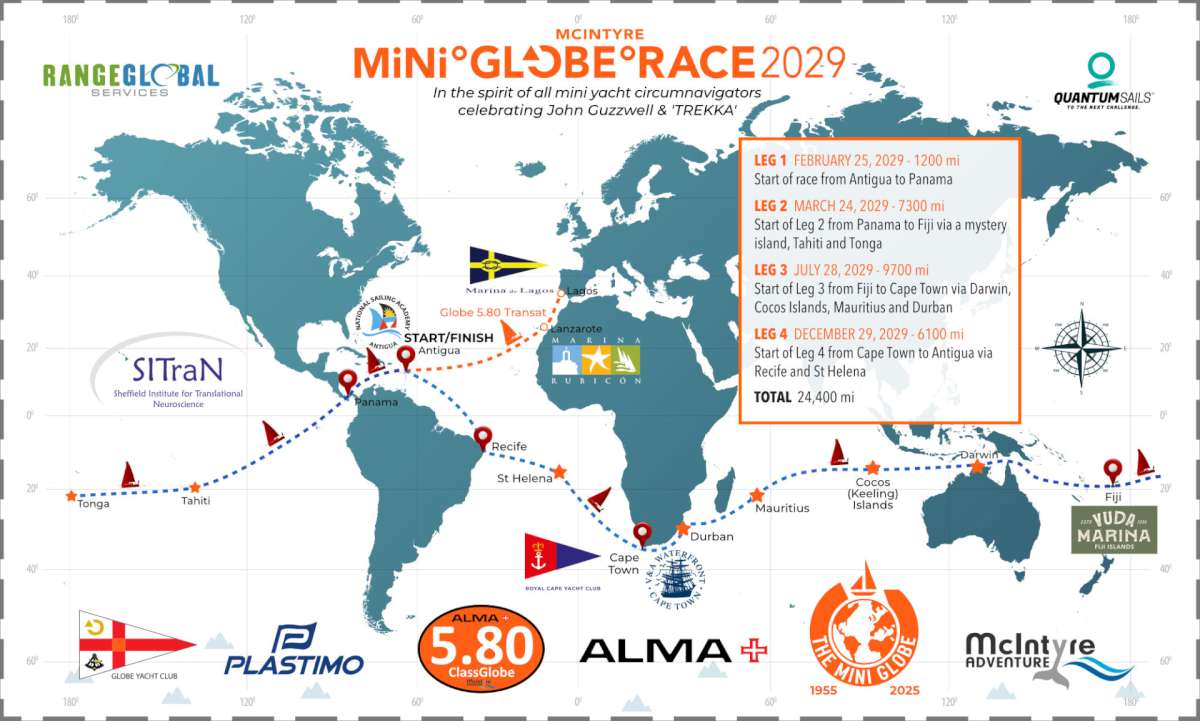
The Mini Globe Race may be the most remarkable event of them all.
Solo sailors circumnavigate the globe in tiny 5.8-metre Class Globe yachts, proving that adventure does not require a large budget or a large boat. The race is sailed in stages and follows a westabout route through Panama before crossing the Pacific and Indian Oceans.
Format: Solo
Direction: Westabout
Stopovers: Multiple
World ARC
Strictly speaking, the World ARC is not a race at all.
Organised by World Cruising Club, it is a round-the-world cruising rally that allows yacht owners to circumnavigate with the support of an organised fleet. Participants sail in stages, enjoying the adventure of ocean cruising without the pressure of competition.
Format: Cruising rally
Direction: Westabout
Stopovers: Multiple
Eastabout or Westabout?
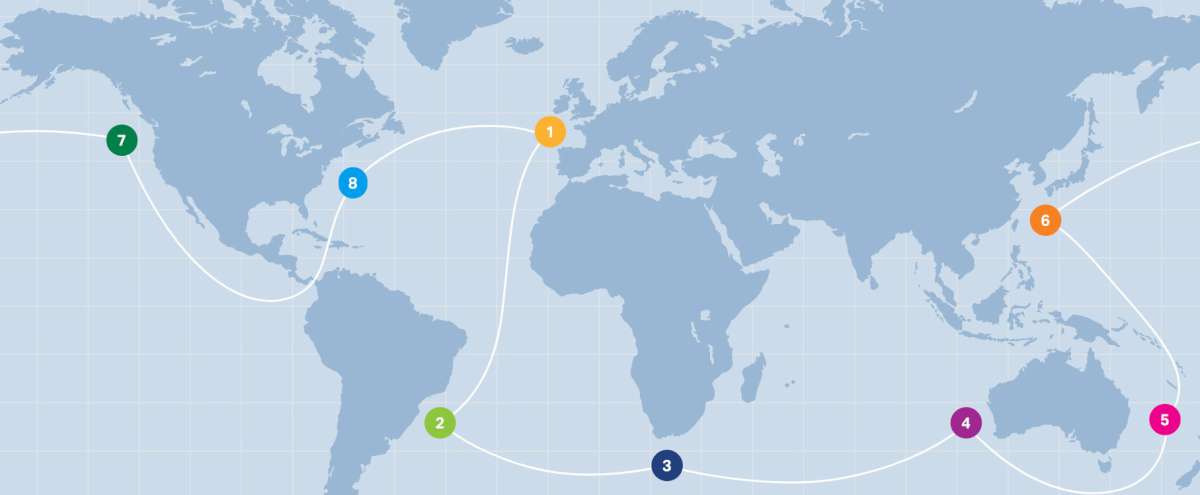
One of the biggest differences between round-the-world events is the direction of travel.
Most professional races sail eastabout, taking advantage of the prevailing westerly winds of the Southern Ocean. This route is generally faster and follows the path made famous by the Whitbread and Vendée Globe.
Westabout events head in the opposite direction, often requiring sailors to battle prevailing winds, currents and weather systems. While usually slower, many sailors regard westabout circumnavigations as an even greater challenge.
Whether sailed solo or fully crewed, non-stop or in stages, these events represent some of the greatest adventures in sport. Each offers its own unique test of seamanship, endurance and determination, proving there is more than one way to sail around the world.
@VendeeGlobe #theoceanrace #goldengloberace #clipperroundtheworld #MiniGlobeRace #worldcruising
Interested in seeing more Offshore News?