1970s, a golden decade for Kiwi 18 footers
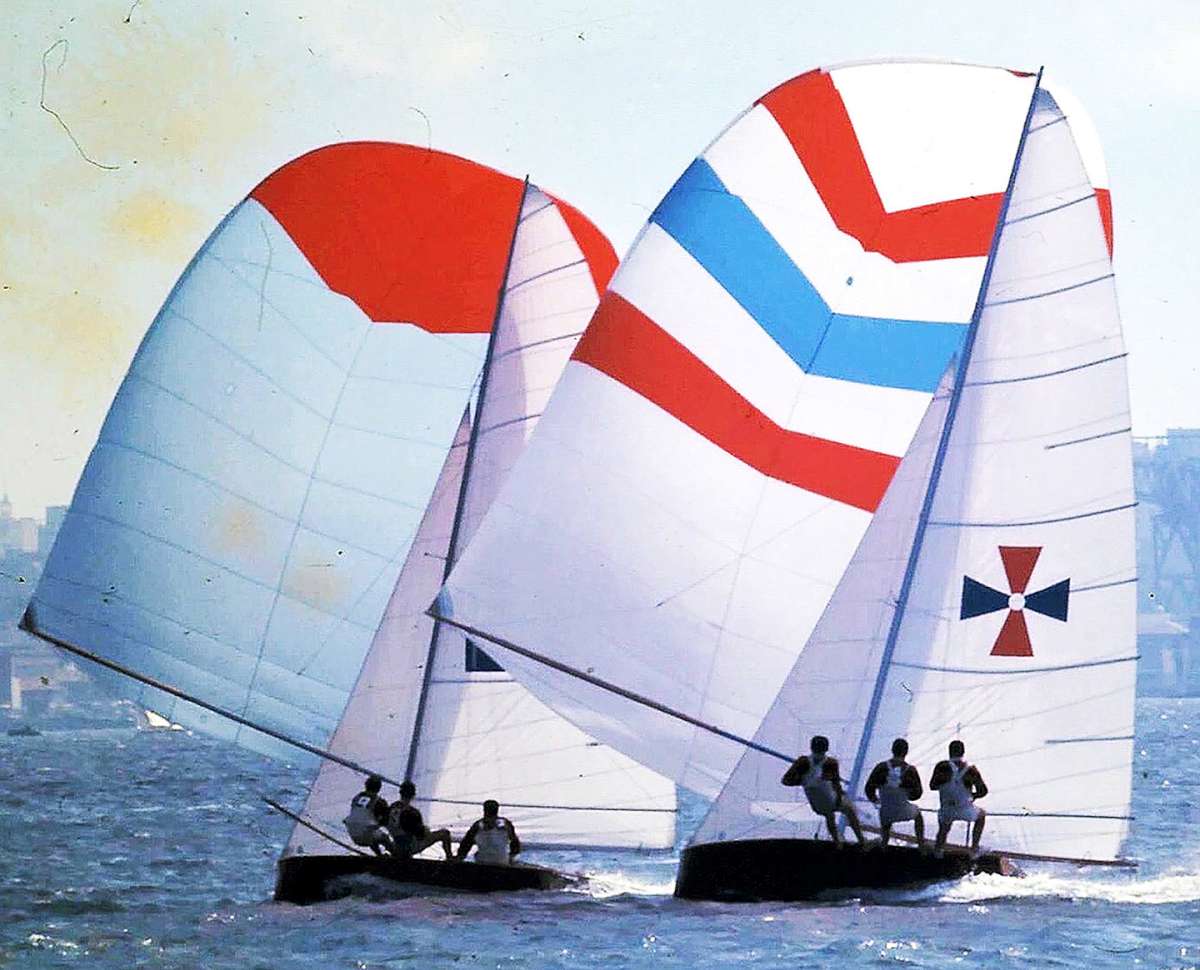
The 1970s was a wonderful decade of evolution in the 18 footers, with strong international fleets, an incredible level of talented competitors and designers, as well as some brilliant competition in World championship regattas, and much was related to a series of Kiwi influences.
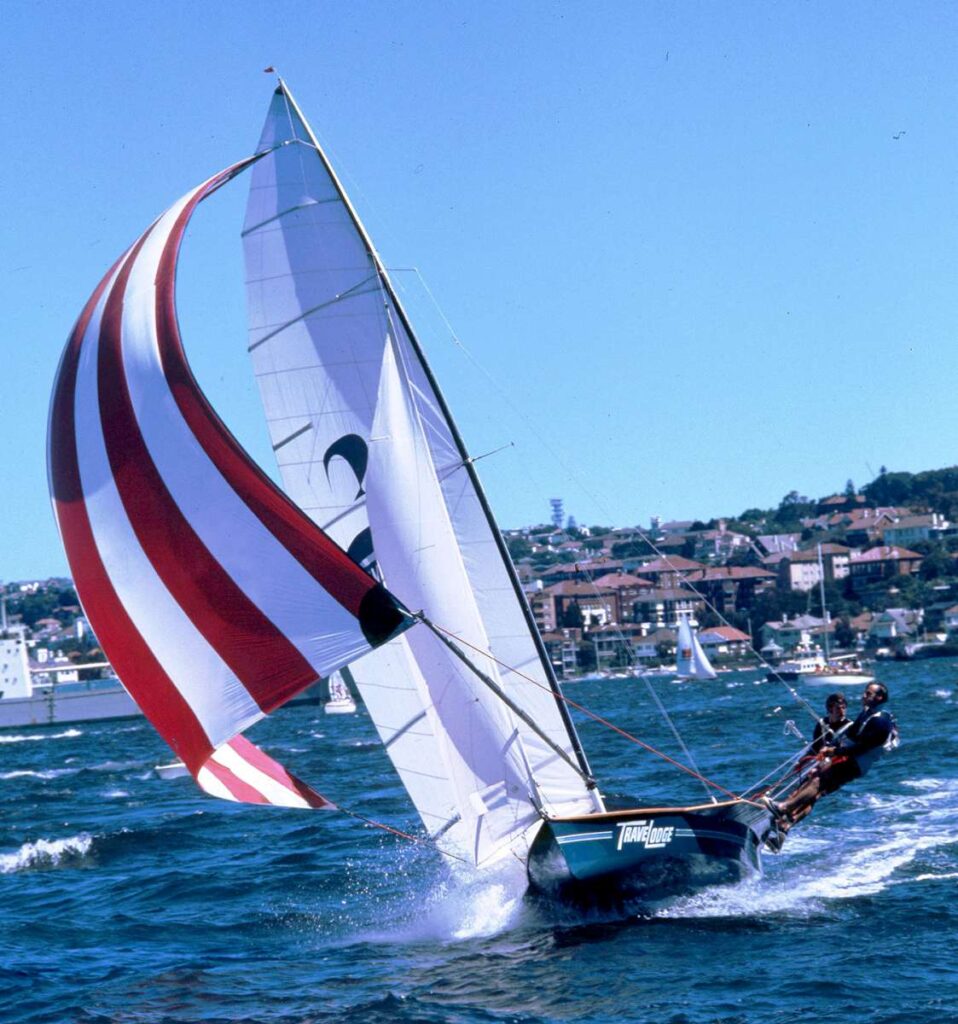
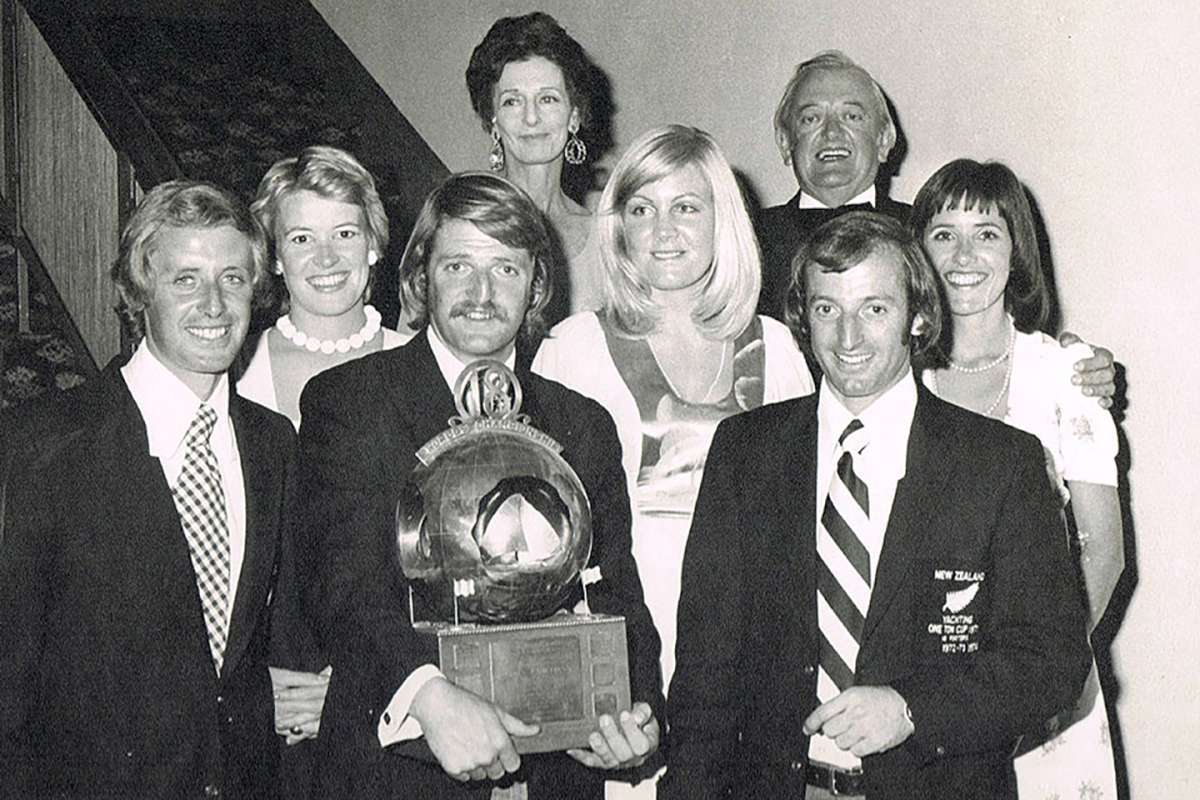
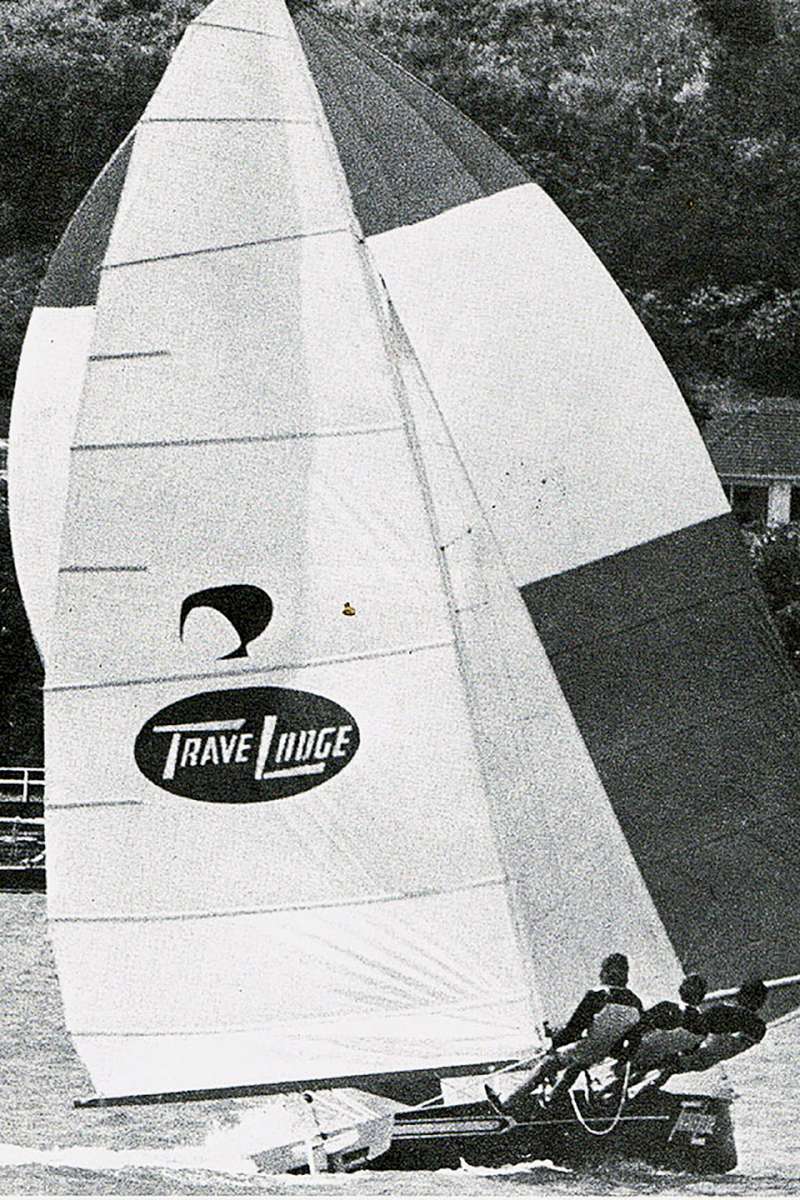
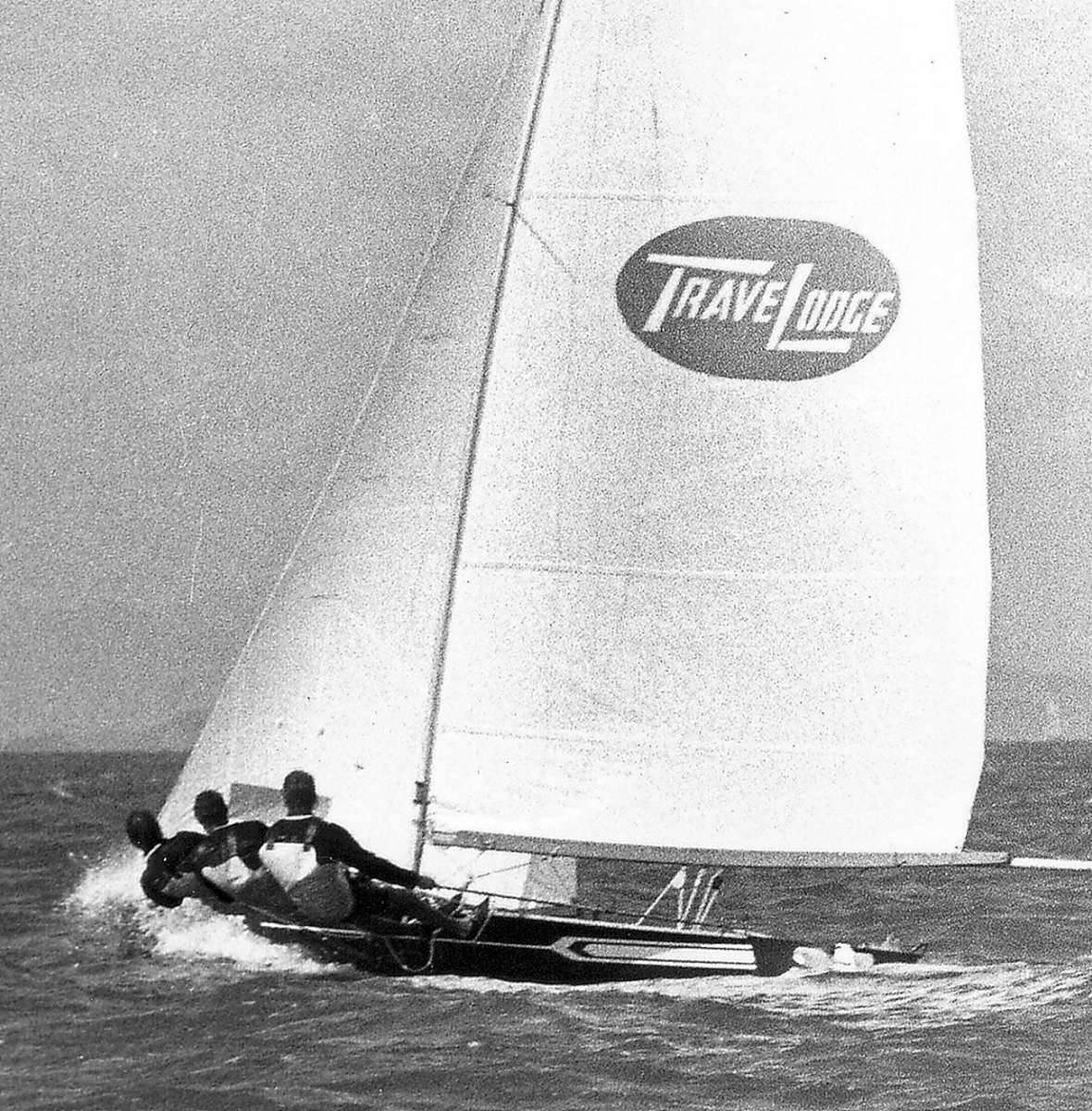
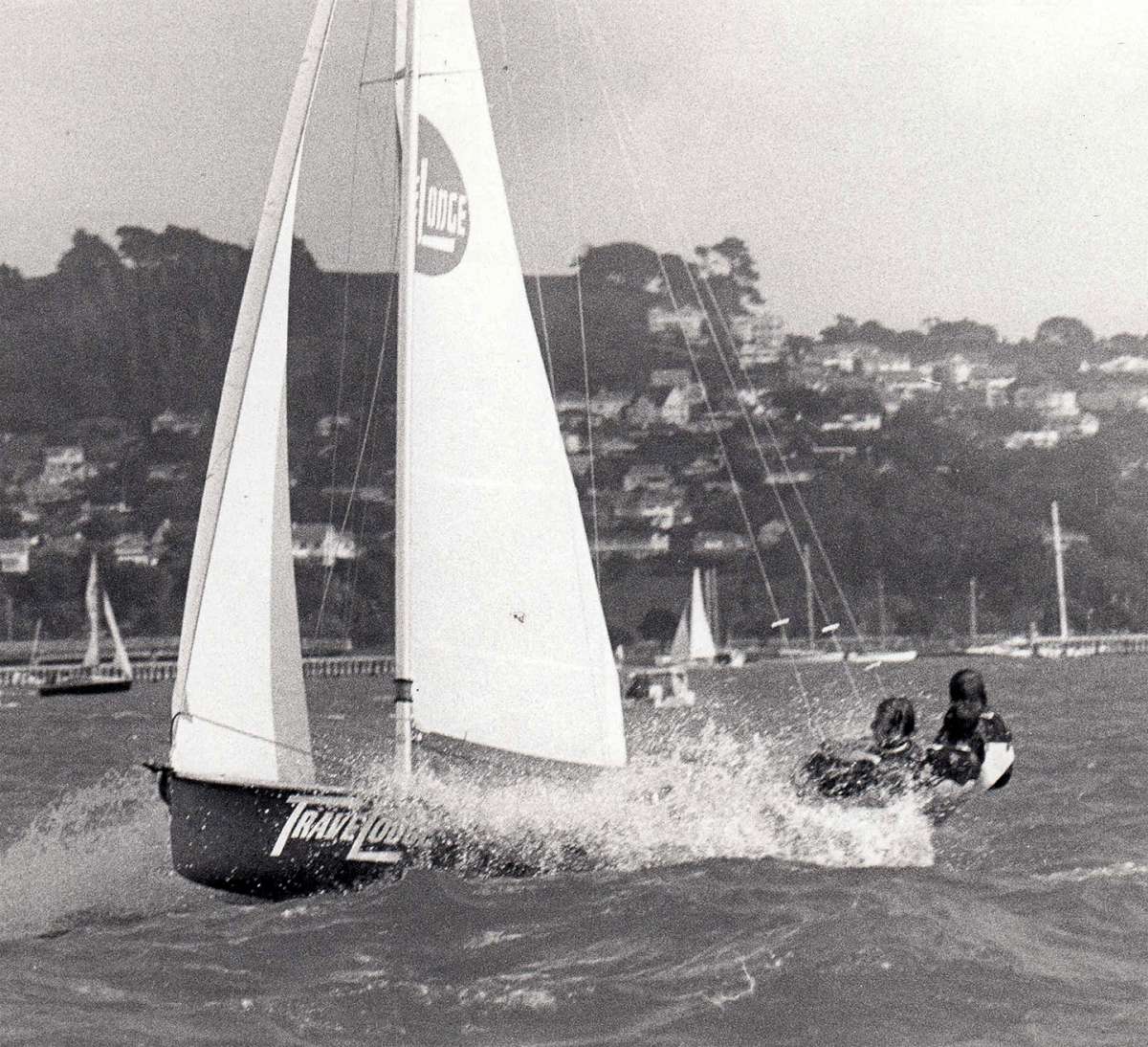
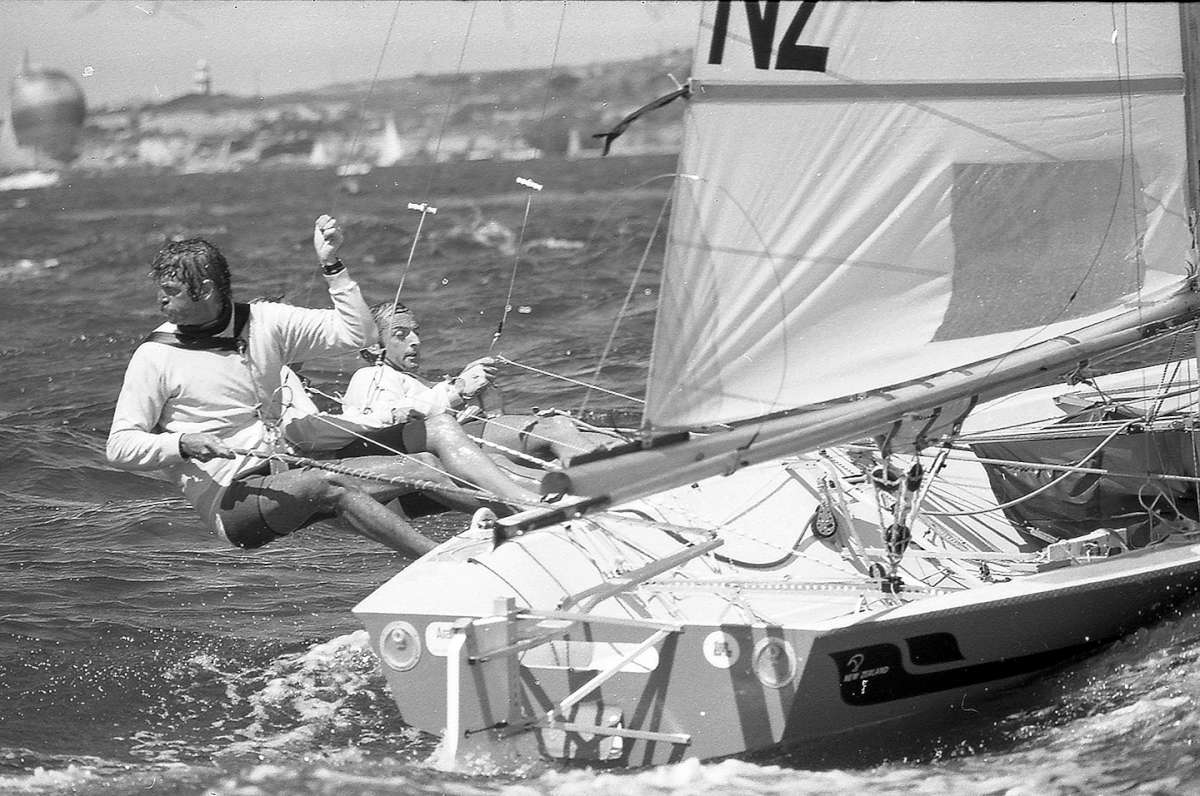
The greatest Kiwi achievement of all was the incredible performance of the Travelodge New Zealand team which recorded an amazing 1974 regatta victory over a highly-talented Australian 4-boat team on Waitemata Harbour, Auckland.
It began in 1970-71 when two New Zealand designers, John Chappel and Bruce Farr, produced 3-handed skiffs for David Porter (Aussie) and Wayne Fleet (Miss UEB) respectively, which dominated racing on Sydney Harbour and Waitemata Harbour, Auckland.
Although the 4-handed Travelodge NSW won the 1971 worlds in Auckland and the 1973 regatta on Sydney Harbour, for Bob Holmes, each victory was achieved through consistency more than outright brilliance and came partly as a result of a rule which was changed at the end of the 1971 regatta.
Until that time, a competitor which capsized was not permitted to continue to race. A very costly problem for the flying 3-handed Aussie which won two of the five races in 1971 but capsized in two others.
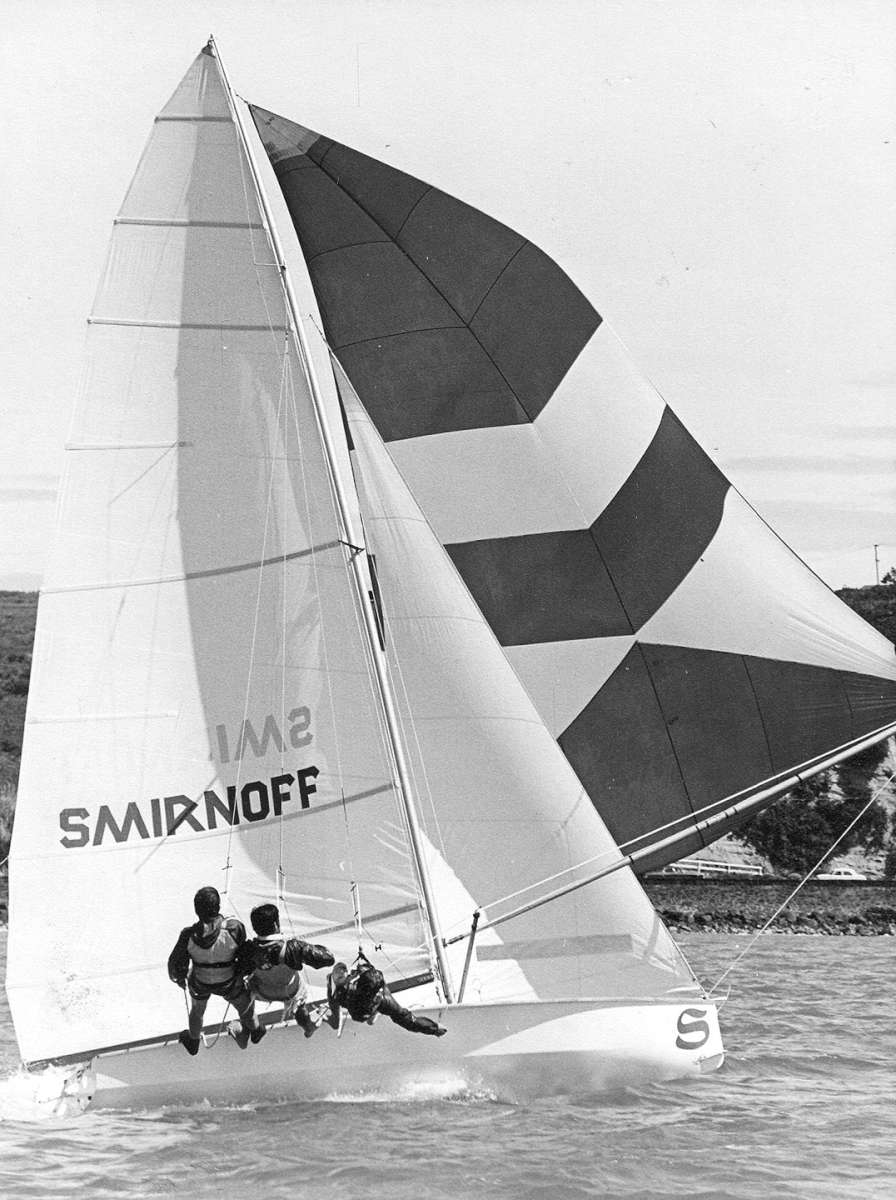
Despite the result for Aussie, the writing was on the wall for the long-term future of 4-handers and the change became a reality the following season when the Bruce Farr-designed Smirnoff dominated the 1972 World Championship regatta on Brisbane’s Waterloo Bay.
Smirnoff scored easy wins in each of the first four races when Don Lidgard and his crew successfully used the tactic of tacking downwind to make the skiff almost unbeatable off a wind. Their only defeat came in the final race when they were recalled at the start. After managing to get back into the lead the team capsized again before finally finishing an incredible second – only 16s behind the winner.
The US team was so impressed with Farr’s design it commissioned him to design and build a new hull then make a complete set of sails for the new skiff in New Zealand. On completion they had it shipped to the US, gained a partial sponsorship from the Travelodge organization then took it to Sydney for the 1973 regatta, where Roger Welsh skippered it as Travelodge International.
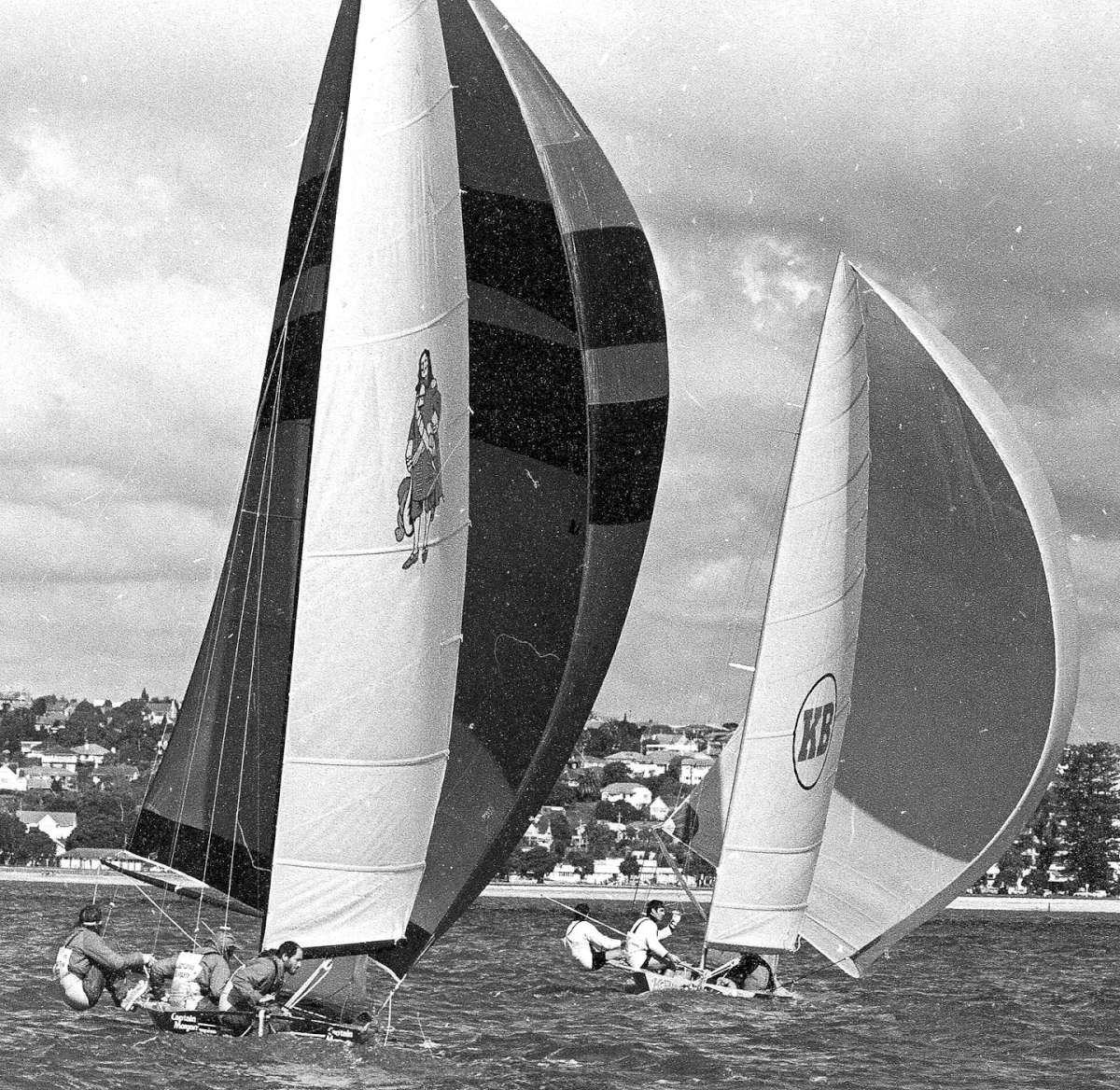
By 1974, Australian champion David Porter had changed to the successful Bruce Farr design and, now sponsored by KB, headed for Auckland as a strong favourite with the large supporter team from the League, which had travelled to New Zealand.
Unfortunately for Porter and the Australian supporters, they came up against one of the greatest teams in the history of the JJ Giltinan World 18 footer Trophy championship.
Despite having three world champion skippers and teams, all sailing Bruce Farr-designed boats, no Australian skiff ever looked likely to defeat the amazing Travelodge New Zealand team of Terry McDell (skipper), Peter Brook (sheet), and Kim McDell (bow) which recorded four consecutive victories with winning margins between 3-5 minutes in all three rig conditions.
Read how Travelodge New Zealand destroyed the hopes of a strong Australian squad, as told by the McDell brothers, at the end of this article.
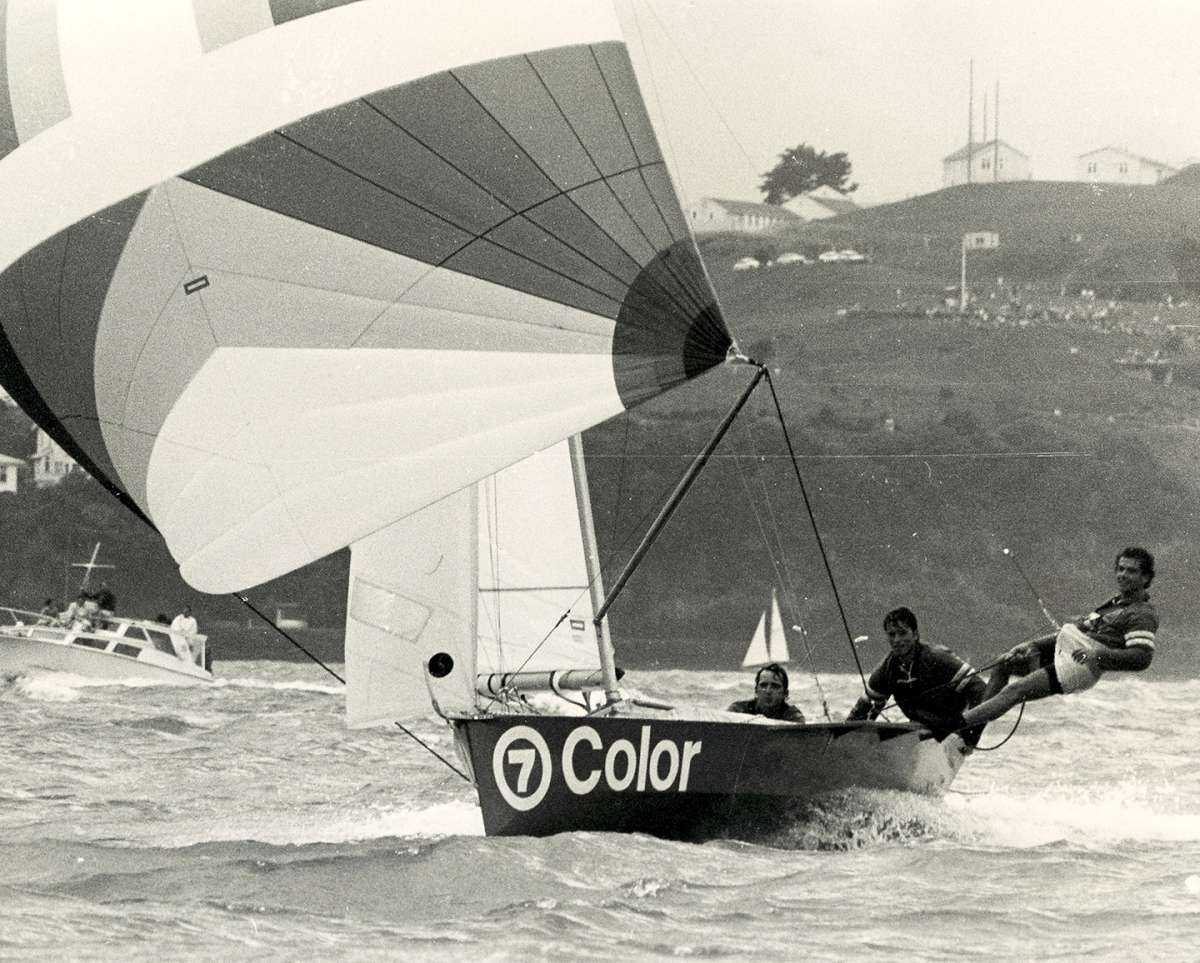
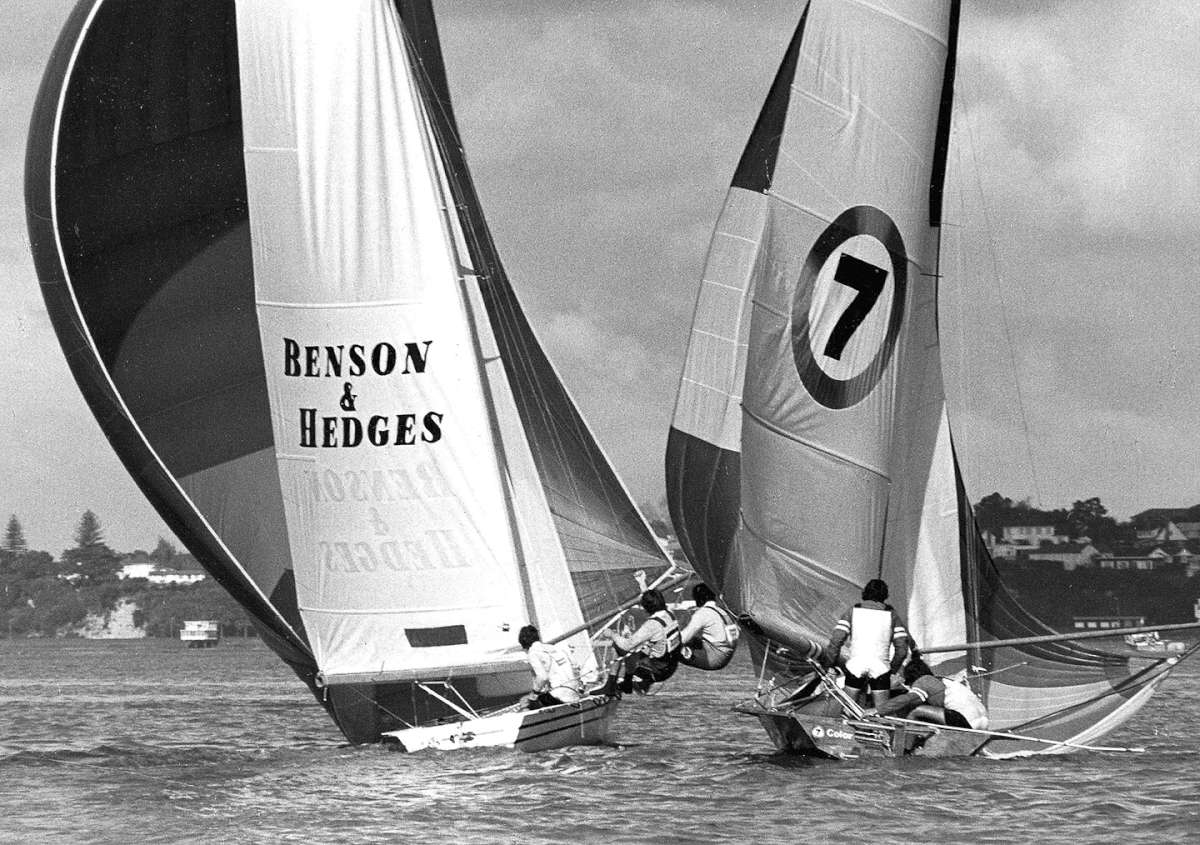
In total contrast to 1974, the 1977 regatta in Auckland wasn’t decided until the final leg of an incredible final race when Iain Murray (Color 7) came from well back at the final rounding mark to grab a narrow victory from David Porter (KB).
The contest had been wide open throughout and the first four races produced four different winners before KB and Color 7 went into the final race locked on points. With a 20-knot wind and big seas, the final race was a battle for survival. KB was 5½ minutes ahead of Color 7 at the final rounding mark and elected to sail a safety first course to the finishing line. Realizing his only hope for victory was to sail the more risky direct line, Murray pulled off the ‘impossible’ to grab a race and championship victory.
Once again, it was a New Zealand innovation which attracted most attention. This time it was Russell Bowler’s third placed Benson & Hedges. The skiff’s revolutionary foam-sandwich construction pioneered a polystyrene core sandwiched by a thin fiberglass laminate, and was said to be one-third lighter than the plywood New Zealand boats.
The Australians were so impressed that similar type boats were built for the following season’s racing to replace the lightweight moulded-timber construction. Unfortunately, their rush to take advantage of costly, space-age technology was beyond the capacity of the sport at the time and badly affected the competitive level of existing fleets, and led to a decline in the New Zealand fleet for several seasons.
Travelodge New Zealand, 1974
Terry and Kim’s father, Roy McDell was “a mad keen 18 footer sailor” who owned his first 18 when he was 17. Not surprisingly, the two boys were exposed to the thrill of 18 footer sailing at a very young age and crewed on various 18s and 12 footers before securing a 100 per cent sponsorship for the Travelodge 18 left in NZ by Bob Holmes after winning the 1971 Worlds.
Aside from their sailing activities, all three of the crew were involved at a high level with athletics. Kim excelled at middle distance and cross country, and in 1961 broke the NZ Junior1/2-Mile record. The following year he equalled the NZ Junior One Mile record. In 1965, after coaching from Arthur Lydiard, he was ranked third in NZ (One Mile) behind Olympic medallists Peter Snell and John Davies.
McDell believes the discipline they learnt from athletics training was transferred to their sailing careers and assisted with the success they achieved.
Back at the 18s, according to Kim McDell, “We immediately recruited close friend Peter Brook and Peter Walker (World Cherub champion with Russell Bowler) as crew and started training for selection at the Worlds in Brisbane in 1972. We did well to finish 4th which was enough to convince Travelodge management to agree to sponsor a new boat for the 1974 series in Auckland.”
Kim recalls, “We worked very closely with Bruce Farr during the designing and build process and also with the builder Charley Webley. The boat was beautifully built and strictly to Bruce’s design.”
“The new boat was a big step up from the four hander and took us quite a while to master but with some solid time on the water, and great competition, we started to improve. Credit here must go to Don Lidgard in Smirnoff and Wayne Innes in Captain Morgan and Russell Bowler and others who made us work for success.”
“Over the Christmas holidays we moved up to the Bay of Islands and spent three weeks in training with Bruce Farr who coaching us and did critiquing and fine-tuning sail and rig development. It was here that we broke our intermediate rig which led us to a nice break through with the replacement.”
“Between Bruce Farr and mast builder Don Baverstock, they came with a rolled tube which turned out to be a breakthrough and dramatically improved our performance in the mid-range.”
Kim added, “Local knowledge always plays a big part but I think that preparation also contributed to our dominant performance.”
“We also experimented with new ideas, some of which contributed to improved performance.”
According to Kim McDell, some of these included:
“A spinnaker chute for the small spinnaker, which was later discarded as being too complicated.”
“Wearing platform shoes to give extra power. We calculated that 3 x 80kg men, 12mm further out was worth a try. Why didn’t we think of wings?”
“We discarded the fiddly parrot beaks from the spinnaker poles and went to old fashioned jaws which sped up the gybing process.”
“We used special surface product out of America called ‘Hydron’ which may have helped.”
“We put emphasis on crew positions including trapezing height.”
“We tried to sail the boat as flat as possible or even slightly to windward.”
“Sails were by Hood NZ with personal input from Helmer Pedersen (gold medalist in Flying Dutchman 1964 Olympics).”
“We fine-tuned our gybing centreboards with Bruce Farr’s input.”
“Bruce designed a small fin on the hull leading onto the top of the rudder.”
“Practice, practice, practice!!!”
“We had a great support crew including wives and family and our boat manager Paul Hooper.”
“We also had great support from our sponsor Travelodge NZ, with manager Bill Allen being especially helpful.”
Skipper Terry McDell added, “Rounding the top mark especially on a shy kite run we tried to go fast at every possible moment. Peter and I would stay on the wire and reach out while Kim was in setting the pole and hoisting the kite. Once done, there was only a few seconds for hoisting and going for it with three out. Other boats squared off immediately, going slow with everyone in the boat while hoisting etc.”
“When tacking downwind in a good breeze we tried to get to leeward when we could by having the leeward kite barber hauler in and a lot of plate up. I would sit in with Kim and Peter on the wire. When a puff came, we would bear away and go low with the puff rather than getting three out like most of the other boats and sailing high”
“Kim’s spinnaker pole invention allowed us to gybe without losing any air in the kite. Many boats would just gybe on the kite and then sort it out. We always made gains on our gybes and often on our tacks where we would unhook before we came in and take the weight on the trapeze handle without the need to sit on the side deck and unhook and then go through. We spent many hours over the winter in two Farr 3.7s perfecting this.”
“Constant rig adjustment using the mast chocker, jib barber hauler, luff tension and mainsheet traveller. Changing gears and keeping the boat in the groove was important.”
“Our medium rig covered a wide wind range. It was powerful in 12 to 15 knots and a rocket ship from 15 to 20 plus. Knowing the local tides also played a big part.”
“I remember Bobby Holmes saying in the early days that if your boat is going fast, then everything turns to gold. How true!!”
Kim summed up, “Working very closely with Bruce Farr was a real privilege and witnessing the detail he went to in the design process gave us huge confidence especially on the back of Smirnoff’s performance two years before in Brisbane. Although there were seven other new Farr boats in the contest I think our direct contact with Bruce was an advantage.”
Summing up the race reports published in the local New Zealand sailing media, it was obvious that Travelodge New Zealand was dominant to windward in all conditions. Fifty-two years after the regatta, the great Australian champion David Porter recalls, “It was well set up and well sailed by her crew; there was nothing we could do.”
In Race 3, Travelodge New Zealand misjudged the start badly and struggled to move through the fleet, but her windward superiority was so amazing that she rounded the windward mark 30s ahead of the fleet, and went on to win by more than 5mins.
In the following race, the wind was about 8-knots. Australia’s KB gambled and went to the southern shore while most of the fleet went to the north. The gamble paid off when KB won the race to the weather mark. Travelodge NZ (big rig) still trailed KB by 22secs at the leeward mark but was more than 1min ahead at the next weather mark and romped away to win by 3 mins.
With Travelodge New Zealand’s dominance and other kiwi boats also performing well against the Australians, it’s not surprising that media reports stated that Orakei Wharf was “jam-packed” with spectators and waterfront drive and other harbor-side vantage points, with cars.
FINAL POINT SCORES IN 1974:
Travelodge New Zealand (NZ) ….. 400.00
KB (Aust-NSW) ….. 313.00
Captain Morgan (NZ) ….. 240.05
Smirnoff (NZ) ….. 204.05
Anyhow (Aust-NSW) ….. 185.67
Travelodge Queensland (Aust-Q) ….. 171.31
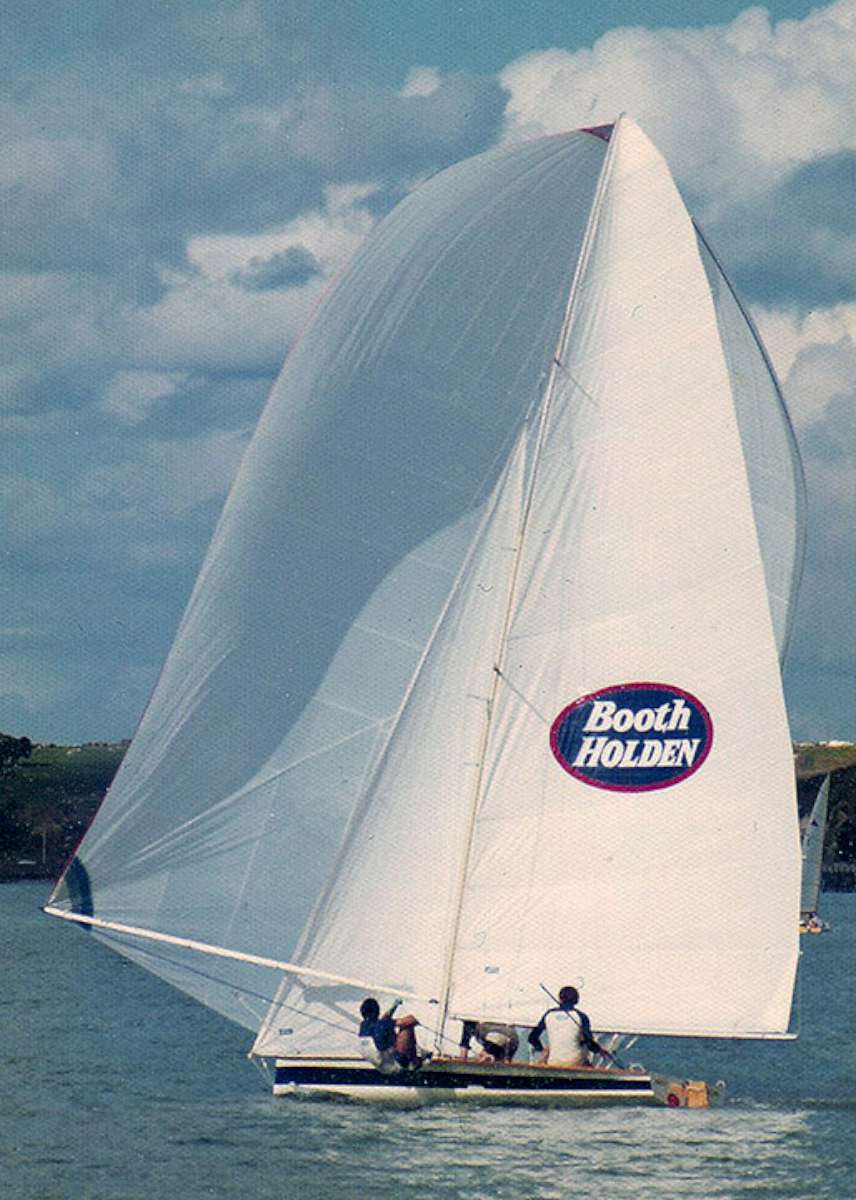
Booth Holden (Aust-NSW) ….. 164.96
The 1970s was definitely a golden decade for New Zealand 18 footers
Frank Quealey – Australian 18 Footers League Ltd.
#18Footers #SailingHistory #TravelodgeNZ #JJGiltinanTrophy #BruceFarr
Interested in seeing more Racing News? Click here
Interested in seeing more News about the 18ft Skiffs? Click here