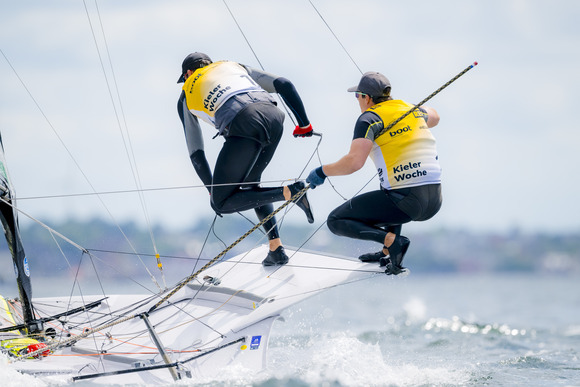
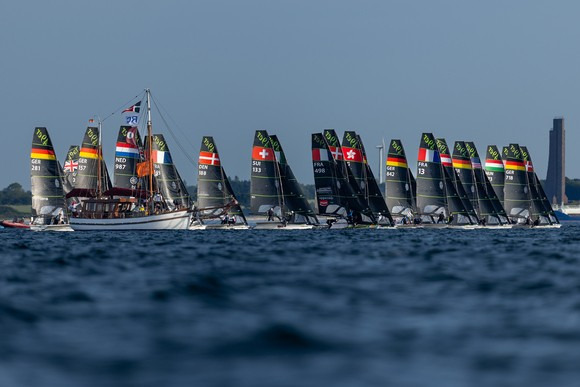
Reliable competition schedules, maximum medal contenders on the final day, and compelling, understandable races are strategies aimed at securing sailing’s Olympic future beyond the 2028 Games in Los Angeles, USA. World Sailing, the global governing body for the sport, is implementing several format changes that will be visible at the 2026 Sailing Grand Slam, which includes the six most significant regattas, culminating in the Kieler Woche. The event will commence on June 20 at 1 pm, with the highlight being the medal races on June 24.
This year, sailing fans can anticipate two medal races in the Olympic classes, a shift from the previous format of a single race. These races will now operate on a single-point scoring system instead of counting double. Each medal race is expected to last approximately 12 to 17 minutes, and the decisive competitions will be broadcast live via KielerWoche.TV and on the LED screen at the Sailing Arena in the Schilksee Olympic Centre.
In a move to enhance excitement, the leading team cannot secure victory in Kieler Woche with the final to spare. The outcome will hinge on the results of two medal races rather than one. This adjustment is expected to keep the suspense alive until the very end.
Additionally, the scoring system prior to the finals for the five dinghy classes and the Nacra 17 catamarans has been revised. The top ten from the preliminary races will advance to the medal race, but the final results will be more unpredictable. No finalist can achieve more than a nine-point lead over their closest competitor, regardless of their prior positioning. The maximum deficit behind 3rd place and ranks four to ten is reduced to 18 points, meaning even a competitor in tenth place could potentially secure a bronze medal, ensuring no podium position is guaranteed before the last day.
The intention behind the new point compression is to maintain a competitive field where ten different nations can contend for medals by the end of the regatta. This strategy aims to attract broadcasters, as reliable start and finish times are crucial for program planners. Frequent false starts can be detrimental, leading to recalls and delays.
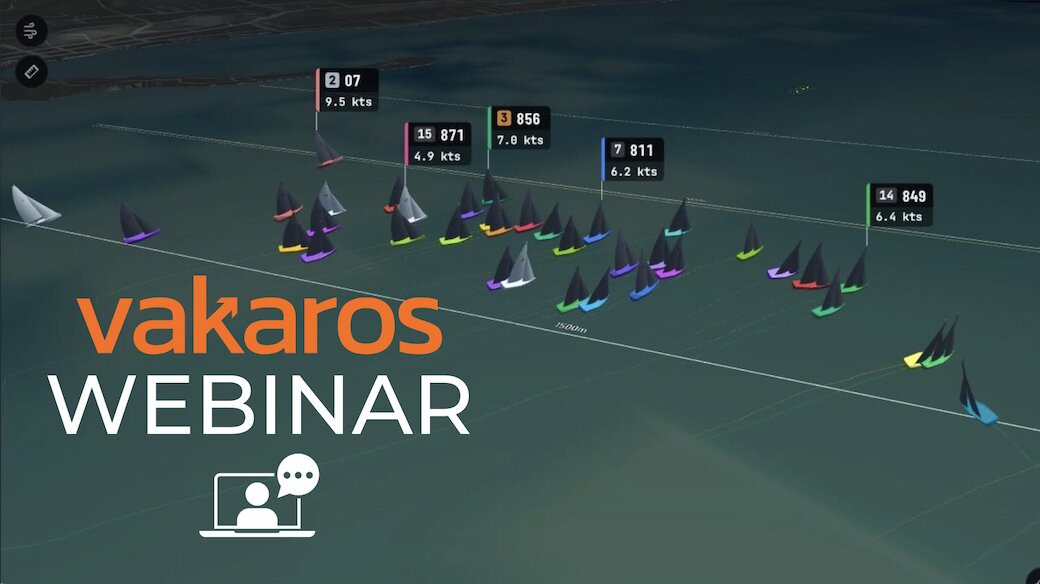
To address the challenges of starting procedures, the 49er class is already employing an electronic GPS-based starting system, which has proven effective in eliminating time-consuming general recalls. This system uses precise satellite technology to establish the starting line and employs GPS trackers on all participating boats. This innovation allows for immediate feedback in the event of an early start, ensuring the race can continue without unnecessary interruptions.
Other boat classes are likely to adopt similar technologies to meet media demands and enhance spectator engagement. The sport of sailing must demonstrate broad global interest to thrive, and Kieler Woche is committed to this goal, particularly in light of Kiel’s bid to host the Olympic sailing competitions in 2036, 2040, or 2044.
For more information, visit the official Kieler Woche website.
#kielerwochesailing #Olympics
Interested in seeing more Racing News? Click here