By Will Carson – SailGP Media:
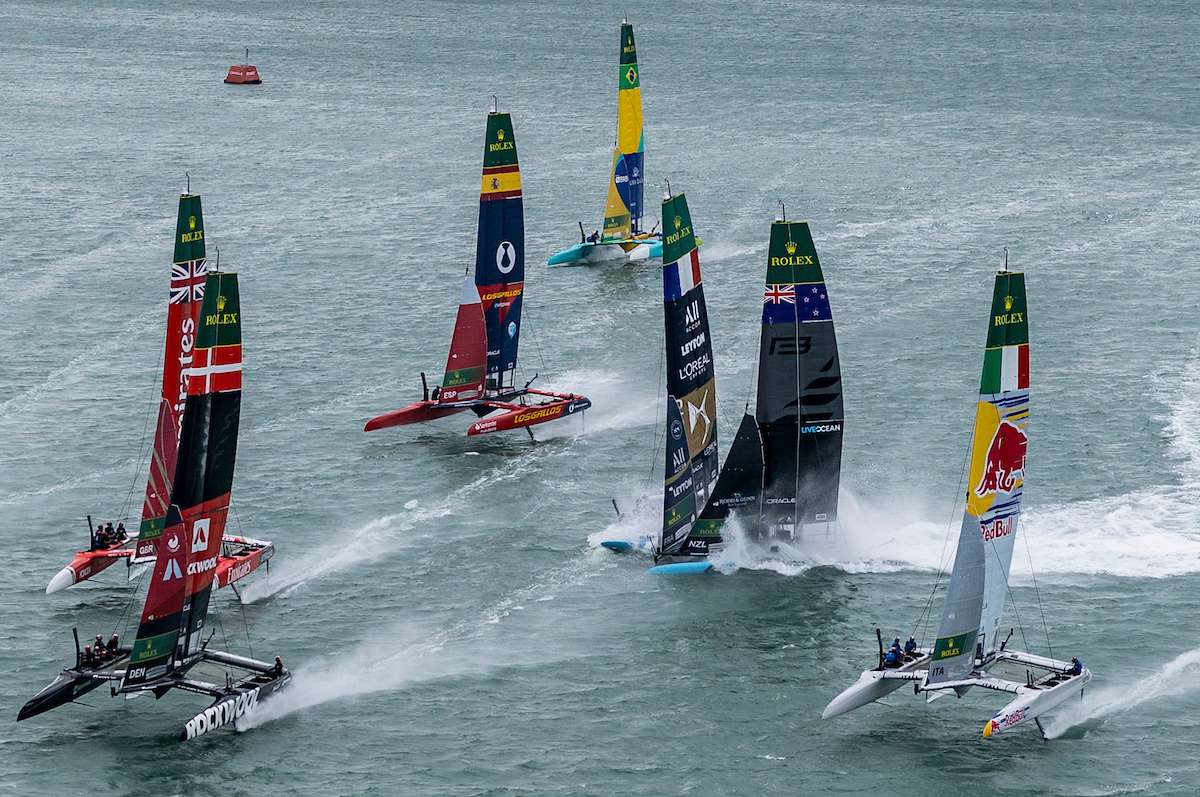
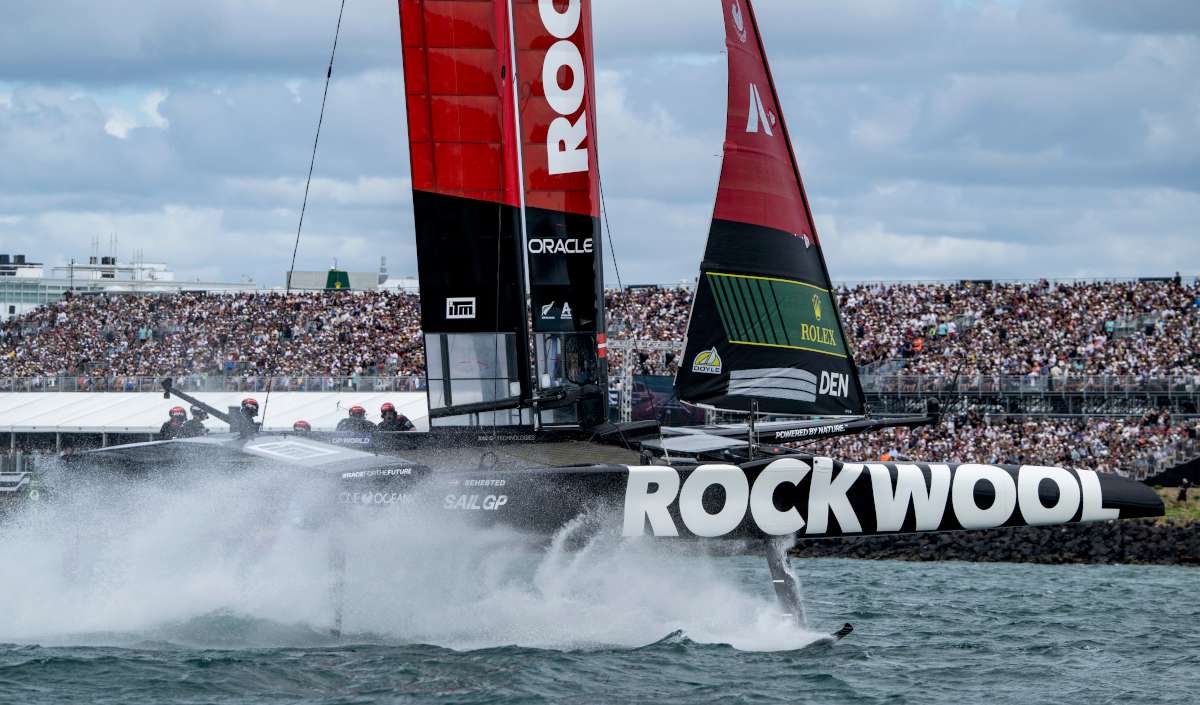
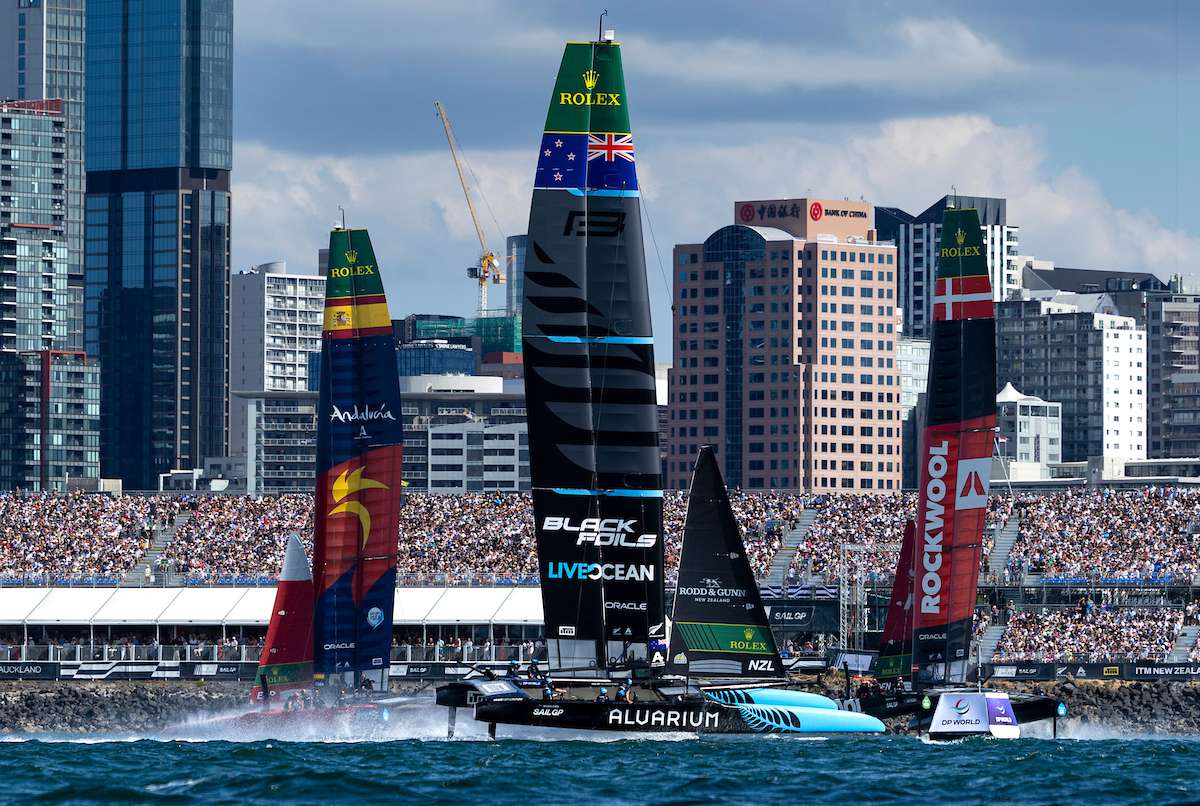
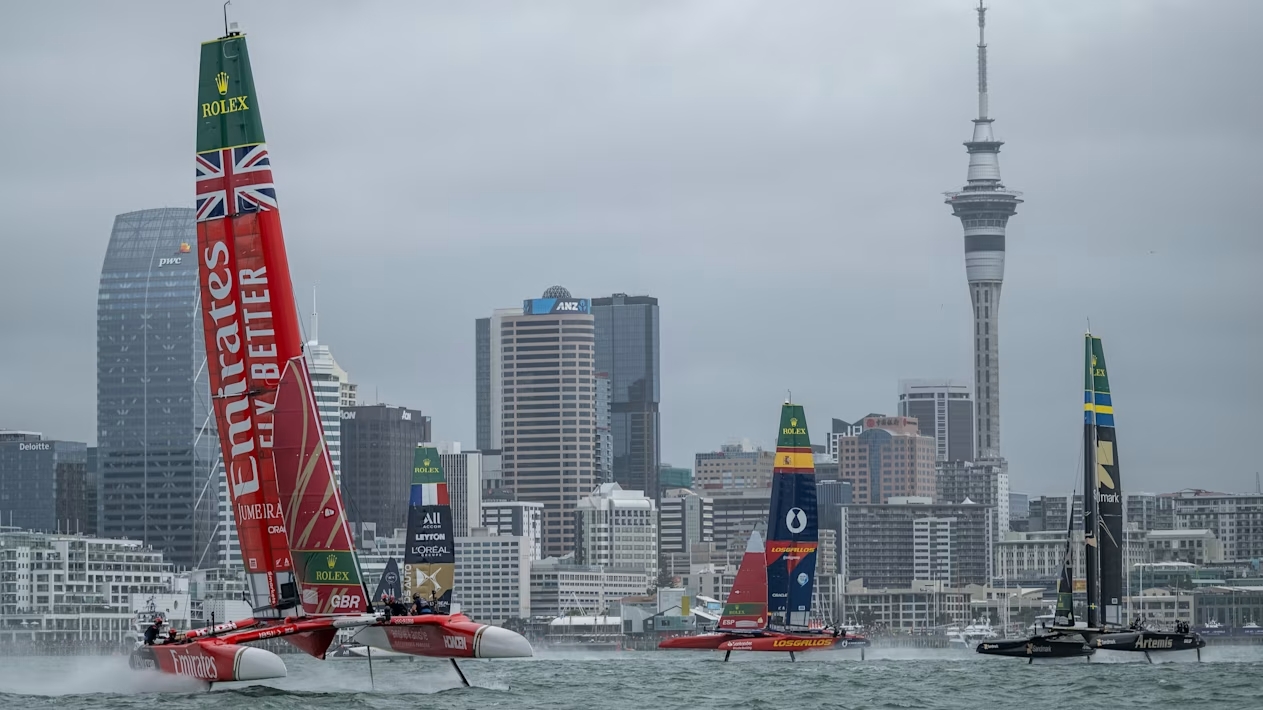
When 13 F50s charge toward mark one, it can feel like threading a dozen needles in a wind tunnel. For day two of the ITM New Zealand Sail Grand Prix in Auckland, SailGP is giving the fleet a little more breathing room – adopting a split-fleet format, designed to keep racing sharp, safe and spectacular for fans on the close-to-shore harbor racetrack. Only 11 boats will take part following yesterday’s collision between the Black Foils and DS Team France.
How it works
Think of it as two parallel battles feeding one grand finale. The fleet is divided into Group A and Group B – listed below – sorted based on the current event leaderboard. Each group races separately – two races each (A, B, A, B) for four total fleet races – and teams score points within their group:
- 1st place: 5 points
- 2nd place: 4 points
- 3rd place: 3 points
- 4th place: 2 points
- 5th place: 1 point
- 6th place: 0 points
Points from the groups will be combined into a single table ranked by the highest points and the top three teams qualify for the Final.
The two groups today will be:
Group A:
- Emirates GBR
- Germany by Deutsche Bank
- Mubadala Brazil
- NorthStar
- Red Bull Italy
Group B:
- BONDS Flying Roos
- Los Gallos
- ROCKWOOL Racing
- Artemis
- Switzerland
- U.S.
The teams will carry their points from the opening day of the ITM New Zealand Grand Prix into today’s racing.
The Final still decides everything
The Final keeps SailGP’s signature winner-takes-all format. Win that race and you win the event. It does not matter where you sat on the leaderboard beforehand. Cross the line first and the event win is yours.
The finishing order in the Final locks in event positions one through three.
What about the rest of the fleet?
Positions from fourth downward are built from split-fleet racing results. Teams are ranked by where they finished within their group. For example, third in Group A is compared with third in Group B.
The team with more total event points across the day ranks higher. If teams are tied on points, the tie-breaker looks at who finished better most recently, starting with the last split race of the day and working backwards if needed.
If still tied, previous event rankings are used, or last season’s rankings if this is the first event. And if the Final cannot be run, the entire event ranking will be determined using those same split-fleet results and tie-break steps.
Why make the change?
Better, cleaner racing
Fewer boats per race means clearer lanes, more tactical freedom and fewer bottlenecks on tight courses. Instead of congestion at mark roundings, expect crisper manoeuvres and more head-to-head battles where skill, speed and strategy decide the outcome.
More racing for fans
Two separate groups means more race sequences across the day – five in total. More starts. More finishes. More moments where everything hangs in the balance. The action does not thin out, it multiplies.
Safety first
With an 11-boat fleet on a tight stadium-style racecourse, congestion becomes a real factor. Splitting the fleet reduces traffic at the start line and around the marks, helping F50s maintain distance as well as the intensity that defines SailGP.
What it means for fans
Expect tighter duels, cleaner tactics and a clear pathway to the Final. The format keeps the adrenaline spike of winner-takes-all racing while creating more room for brilliance to shine.
Click HERE to read the original article.
Interested in seeing more Racing News?
Interested in seeing more SailGP News ?
#SailGP #sailgpaus #NewZealandSailGrandPrix #SailingNews #SailingCommunity