There is never a dull moment in sailing and this year’s Melbourne to Devonport Rudder Cup had its fair share of challenges with the ultimate winners, as always, the weather gods and the mighty Bass Strait.
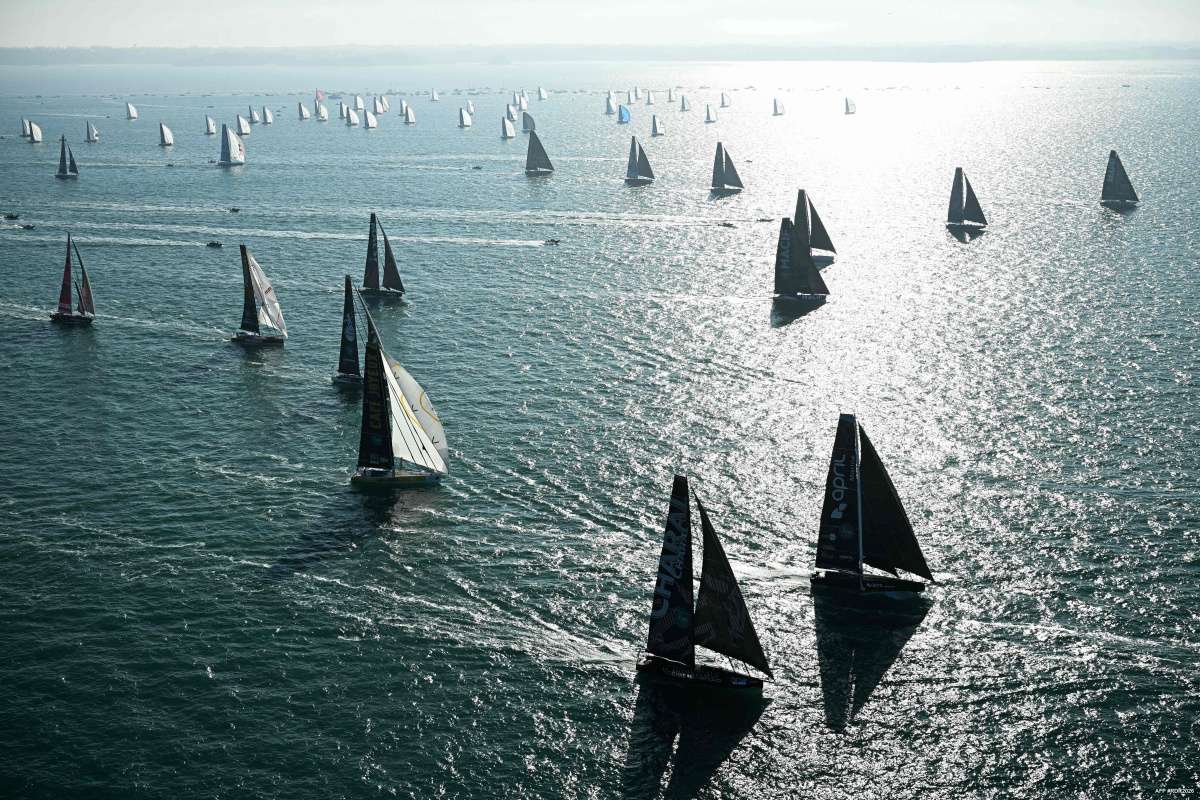
Predictions from earlier in the week had pundits tipping a record-breaking time for the 195 nautical mile sprint from Queenscliff to Devonport, but despite the optimism of the weather watchers and expectations of the close-knit fleet, the 1998 record remains intact.
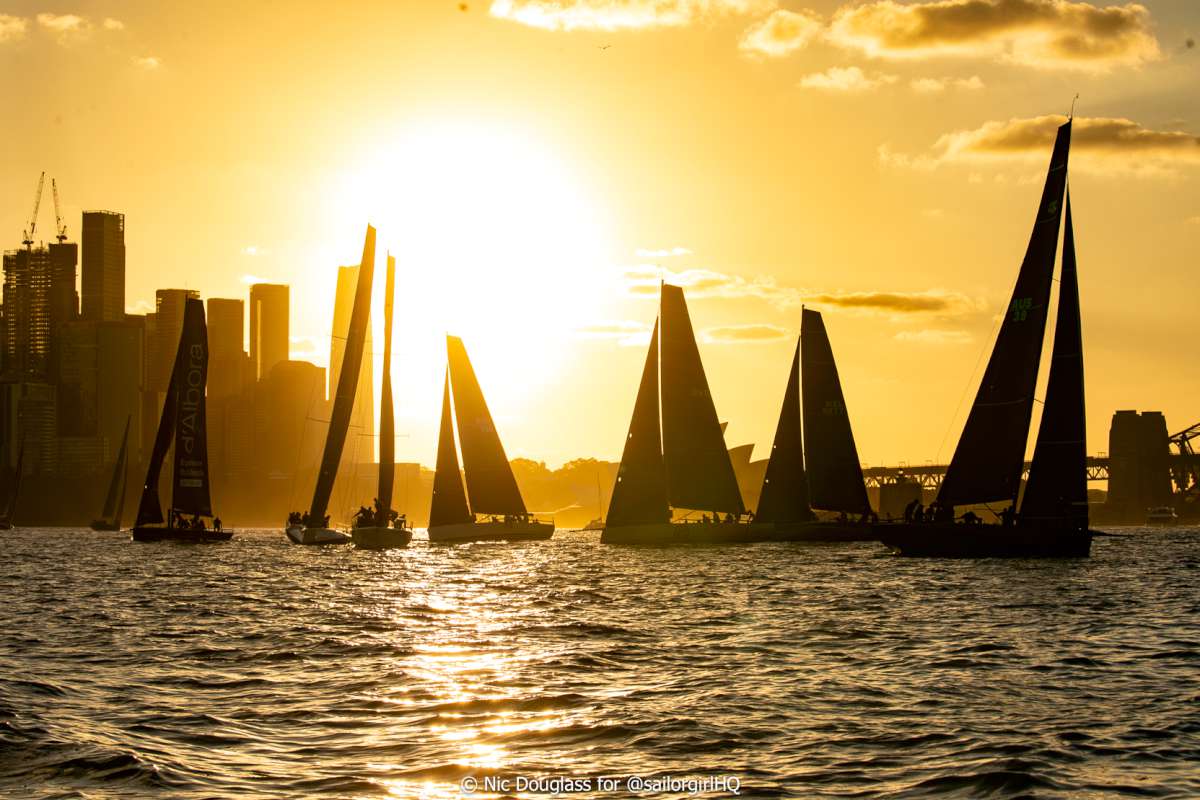
Light conditions were forecast for the Friday afternoon start with race management deciding to start the race just inside Port Phillip Heads.
Unfortunately, the 5-10 knot breeze fell away almost immediately after the start, leaving the fleet waiting anxiously for the breeze to build while simultaneously worrying about how they were going to get out of the Heads in the next to nothing breeze.
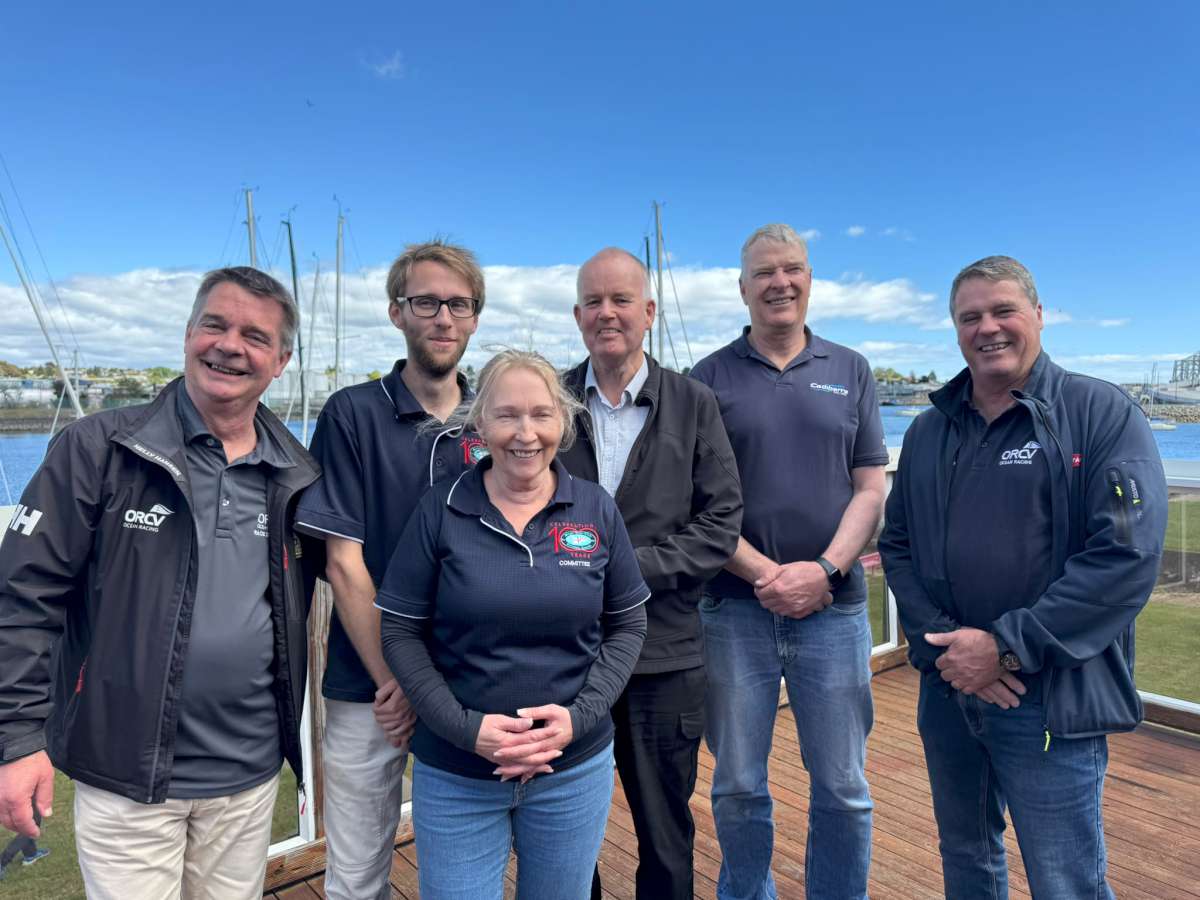
Paul Roberts, Commodore of the Ocean Racing Club of Victoria (ORCV), was on the start line as skipper of the Jones 42, Cadibarra. “Most of the fleet ended up turning in circles and if you got caught on the wrong side of the eddies and The Rip, you were going back past the start line. Some people got lucky and got out okay while some people lost about two hours before their race started,” said Roberts.
Some boats put down anchors to stop them drifting back over the line (which for one boat took some effort to lift back up – cue one angle grinder), while others strategised every alternative, wild or wacky, to get their boats going.
Phillip Capital Faster Forward, the Sydney 38 skippered by Matt Fahey, was one of the boats that used the fickle weather and tidal conditions to their advantage. Sailing master, Simon Dryden, shared his strategy off the start line. “We had really light winds before the start, we looked like we were going to get out [of the Heads], when I noticed rivers of wind in the light conditions, I could see them coming and going, and disappearing. Fortunately, because of that and the tide, I was able to take advantage by going out into the middle of The Rip and when I gybed back, I was able to use the incoming tide to put more pressure in my sails, which enabled us to go faster.”
“If the wind hadn’t puttered out at Mark A, we would have led the fleet out of the Heads,” said Dryden.
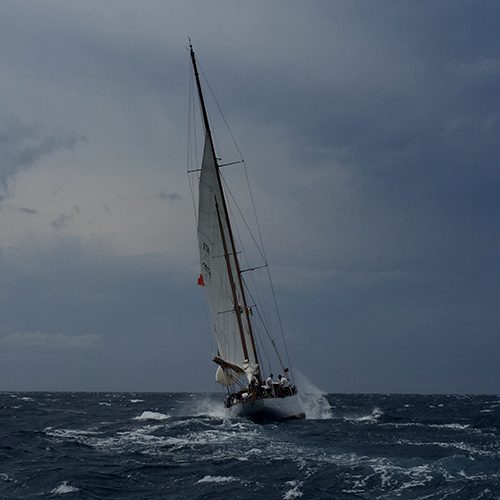
Last year’s race director, Catherine North, changed tack this year, skippering DuXelle in her first Category 2 race. North was delighted and at times overwhelmed by the magnitude of the responsibility of getting the crew safely to Devonport but has already logged some highlights for her memoirs. “It was fantastic … the crew was good, it was hard, parts of it were easy, we all got wet, some got sick, we were surfing down waves at 15 knots – it’s the first time that I have had the boat in 30 knots consistently and in big seas, and she handled it well,” said North.
On managing the first few hours of the race, North was circumspect on the requirements for both race management and competitors. “The weather gives us what it gives us, and the race team makes decisions to give us a good race. Most of the predictions said there would be enough wind for the start so that’s what we went with, and then, once the race starts, it’s up to us [skippers], to manage with the weather, whatever happens,” said North.
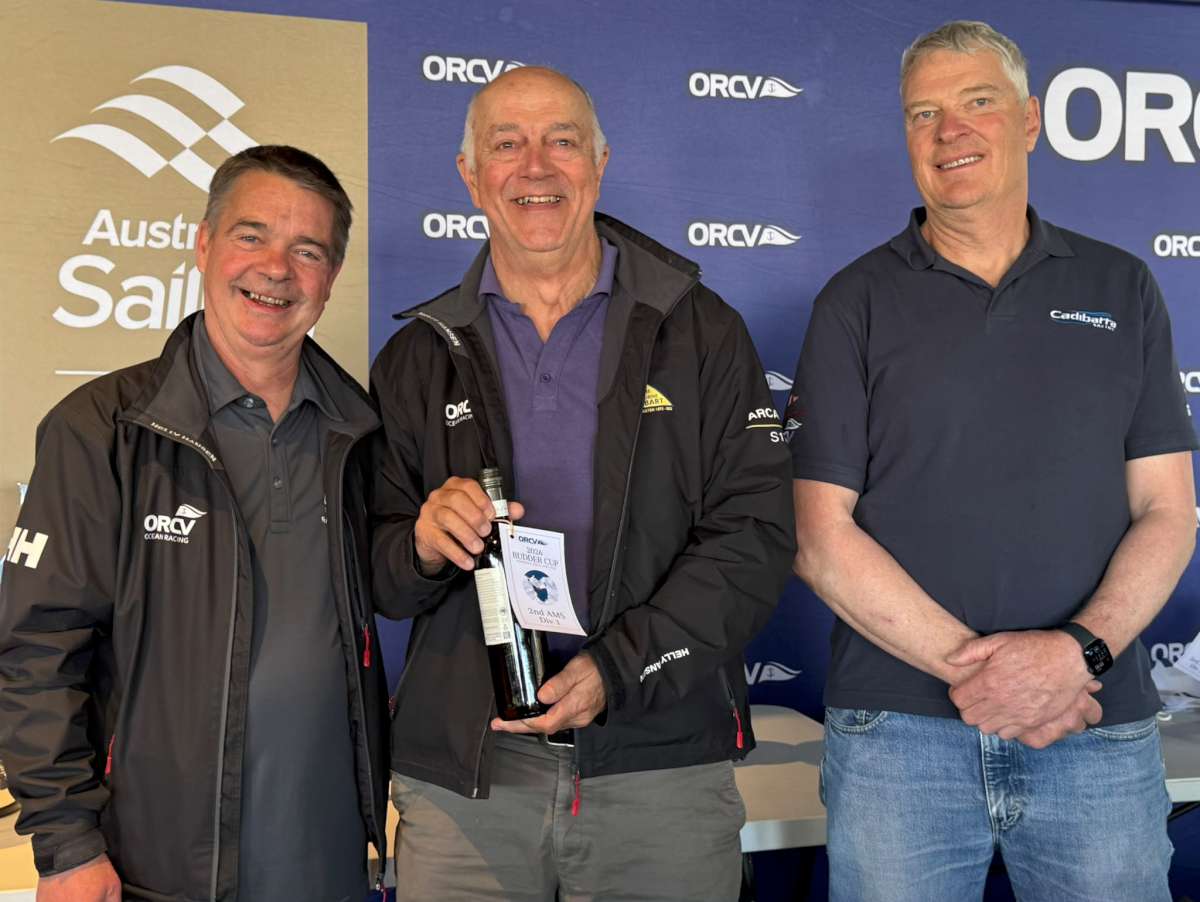
The tricky start has led to several protests that will be decided later in the week and which impacted the awarding of the 2026 Rudder Cup at the presentations.
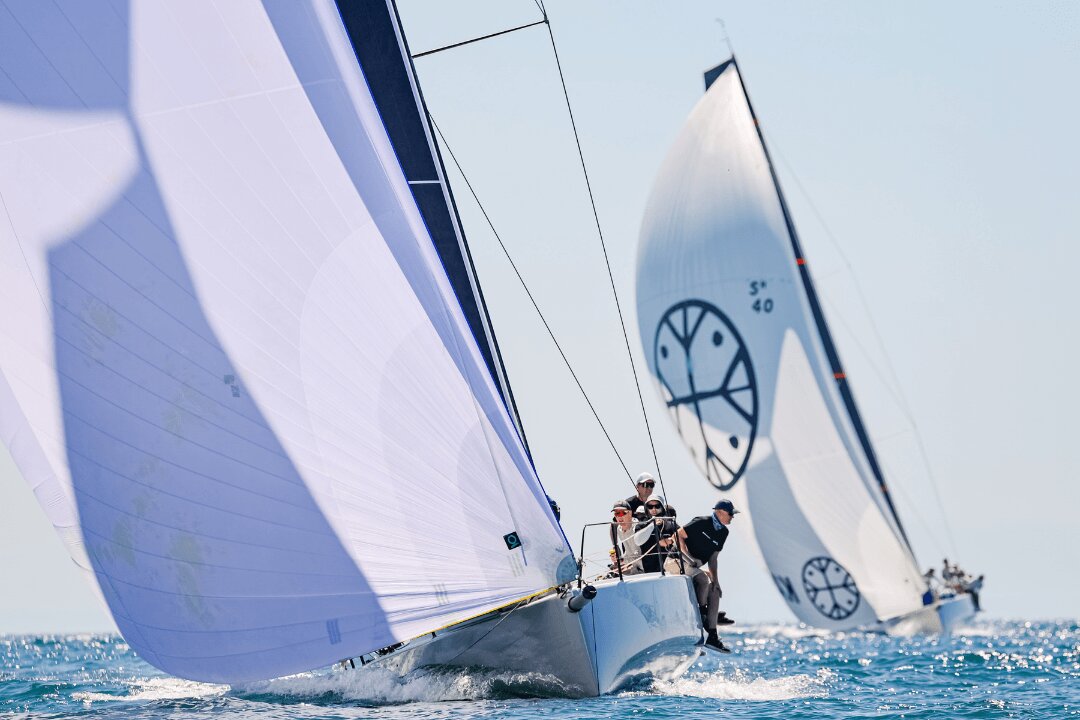
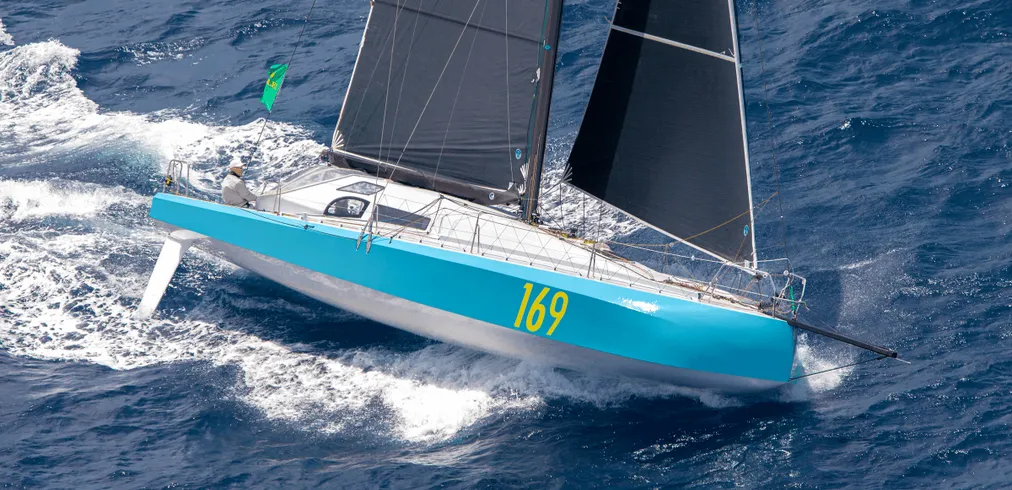
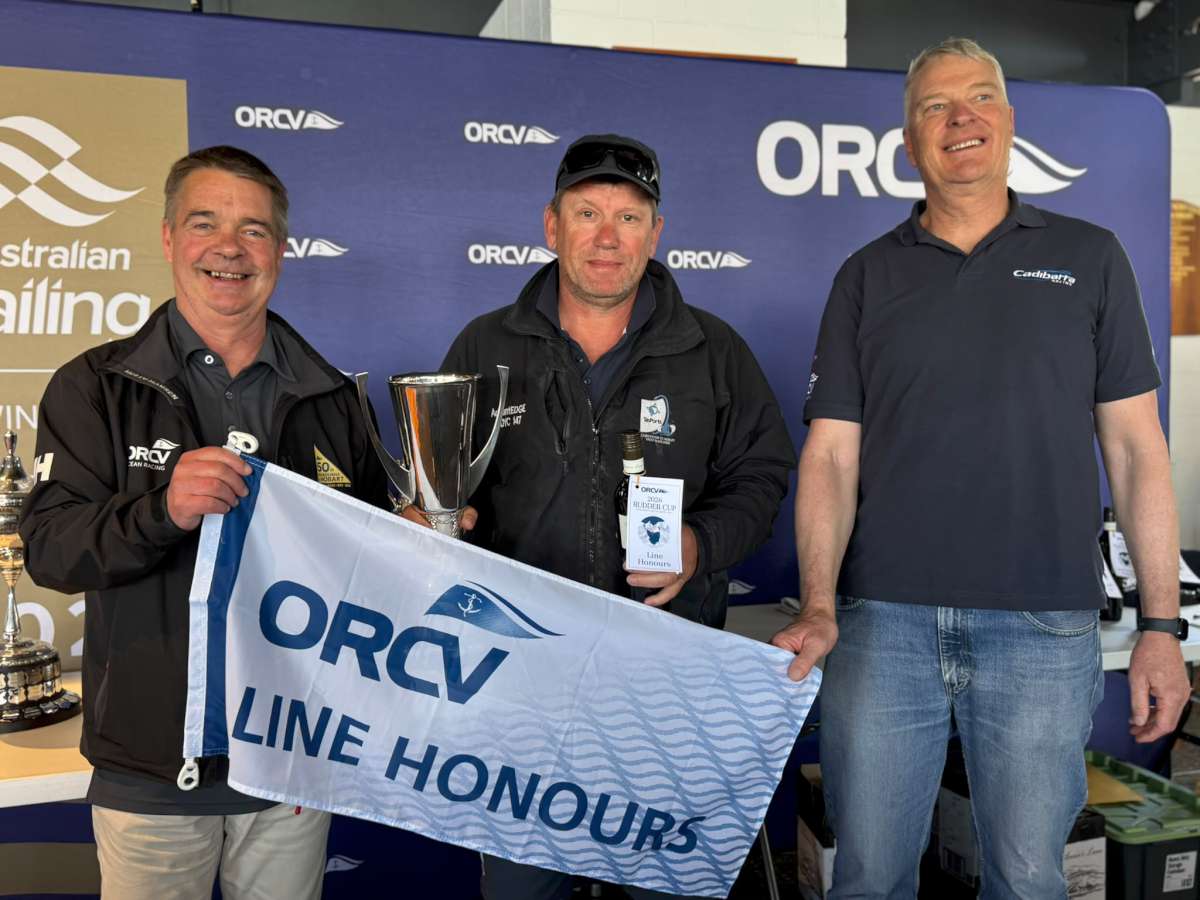
Where there was no doubt was in the three-way battle for line honours, with Andrew Jones’s Inglis 47, Advantedge, from the Port Dalrymple Yacht Club, proving triumphant, winning line honours in a time of one day, 30 mins and 16 seconds.
Jones, one of Tasmania’s most respected sailors, sails the Inglis 47 beautifully, but did admit to having a few hitches here and there. “We worked pretty hard to get out of the Heads first, the current was coming in and out, so we kept an eye on the locals to see where they were going. We gybed at the right place and got into a little eddy that dragged us out quite nicely, then we got into some breeze which got us going. We got a fair lead on the fleet but then fell into a hole, and by the time everyone caught up to us it was virtually another start again. We had a fairly new crew this year, we did some trawling with one of the kites which took a bit to get back and somehow a switch got flicked and we drained all of our batteries, but we ended up working out that we could jump start it with a Milwaukee battery which got us going again,” said Jones.
It was a tight tussle between the Reichel Pugh 40, Chutzpah, skippered by Kingsley Piesse and Cadibarra for second and third place across the line, with a ripped kite causing Roberts all sorts of problems only a few miles from the finish, but that was not enough to dampen the spirits of Roberts and his crew. “It’s been a fantastic weekend of sailing, the conditions across Bass Strait were absolutely stunning, great for the first timers to the race, and not too rough, we had some puffs there to give them a taste of what Bass Strait can be, but it was fantastic sailing conditions, reaching, running, and we even saw some whales coming out of the water on our way into Devonport. About 20 minutes out from the finish we crossed the stern of Chutzpah, but unfortunately we dropped the kite in the water which cost us half an hour and cost us second place,” said Roberts.
Tasmanian and international yachtsman Peter Fletcher and fellow Tasmanian David Watson were onboard Chutzpah for this year’s race. “There was a bit of everything, as promised, lots of drifting, lots of rain, lots of drifting in the middle and plenty of wind in between,” said Fletcher.
“The Rudder Cup is a really popular race … it’s a great shakedown [and qualifier] for the Hobart races closer to Christmas, and great bunches of mates get back together to keep racing,” said Watson.
Both Fletcher and Watson also shared their team’s best wishes for boat owner Bruce Taylor who was not onboard for this race due to ill-health, thanking him and his family’s generosity in allowing the team to sail in this year’s event.
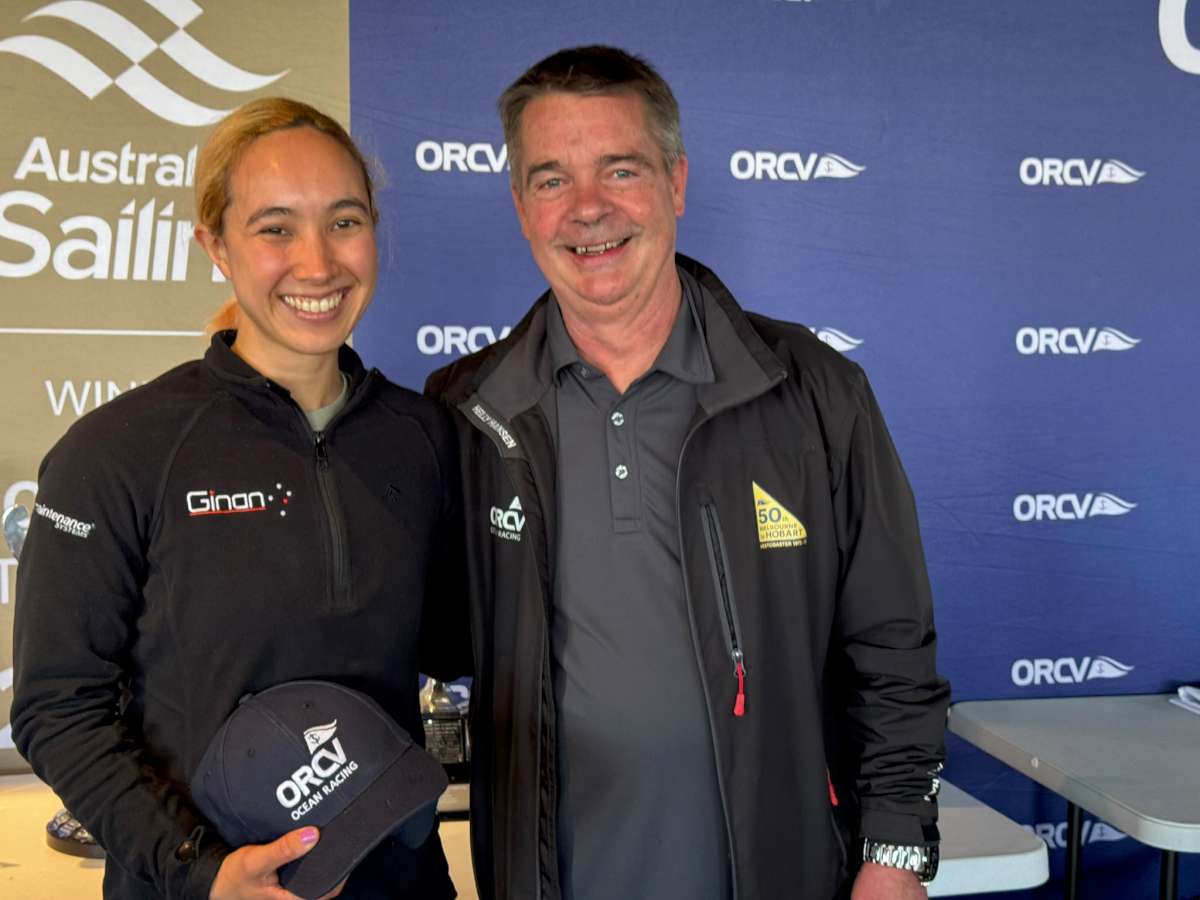
This year’s race was Caitlin Jones’s first Rudder Cup, sailing onboard Ginan with her father, Nigel Jones. “We had a pretty slow start, as did most boats, so it wasn’t as exciting on the start line as I had anticipated, but it was an interesting race. There’s a lot more sail changes than when you do deliveries, and I got a bit of seasickness, which I should have got onto a bit earlier, but I had a really supportive crew to help,” said Jones.
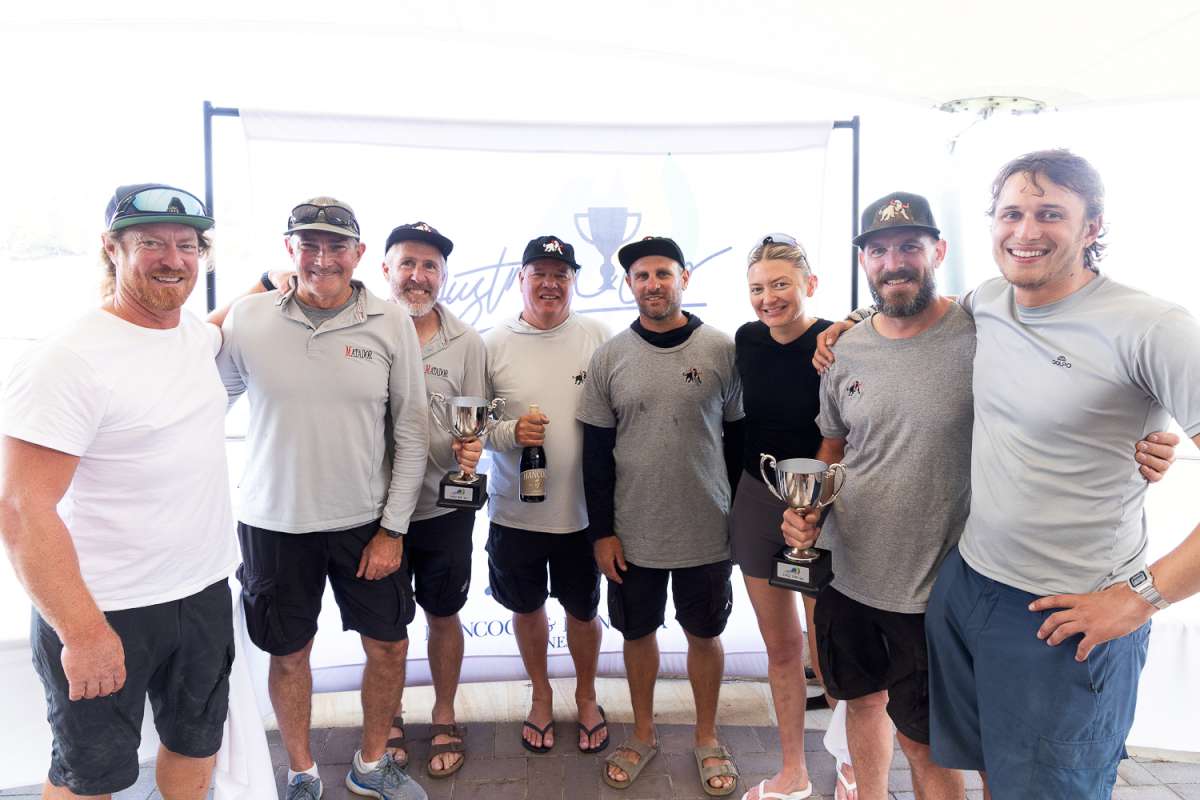
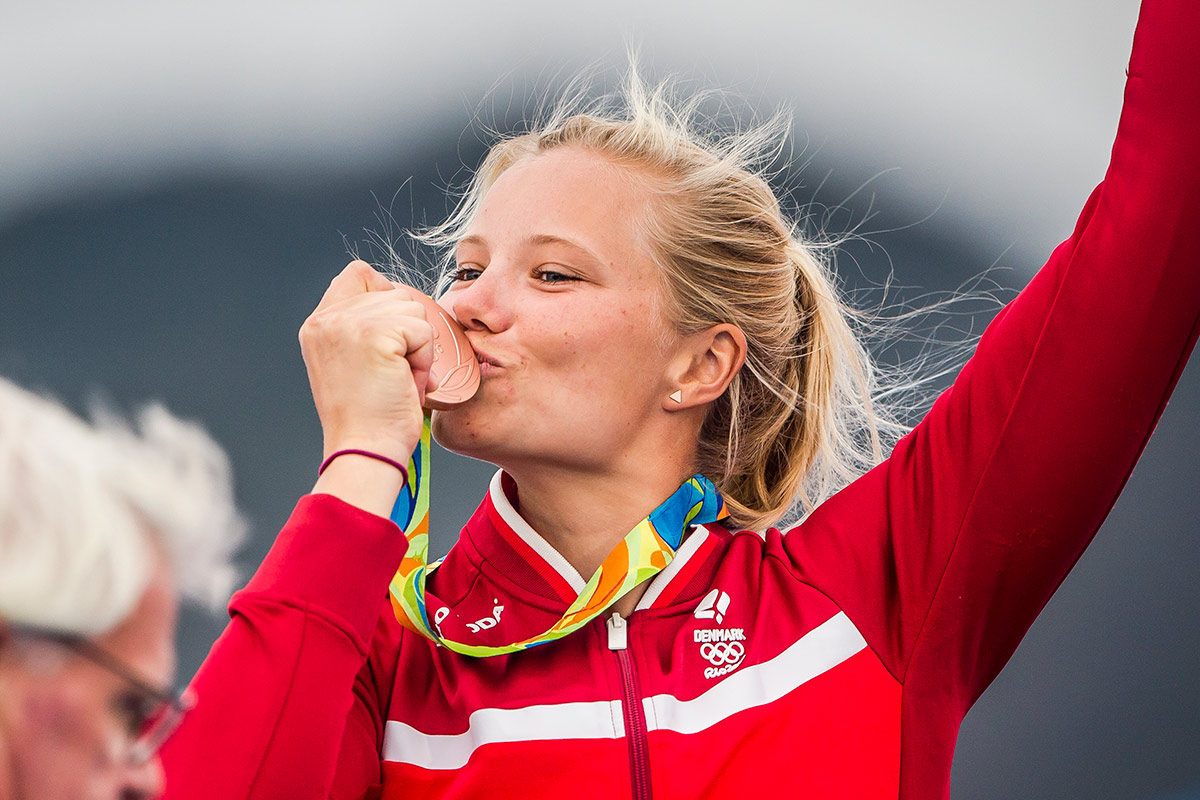
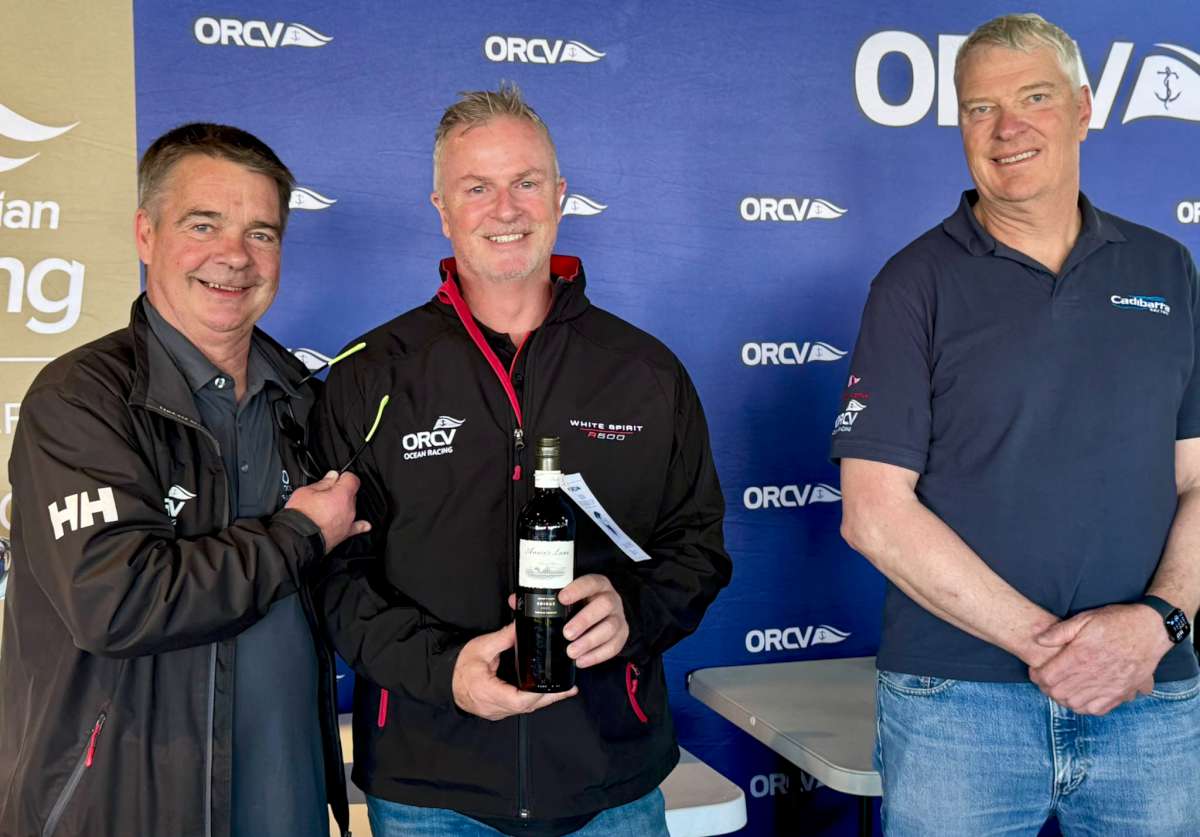
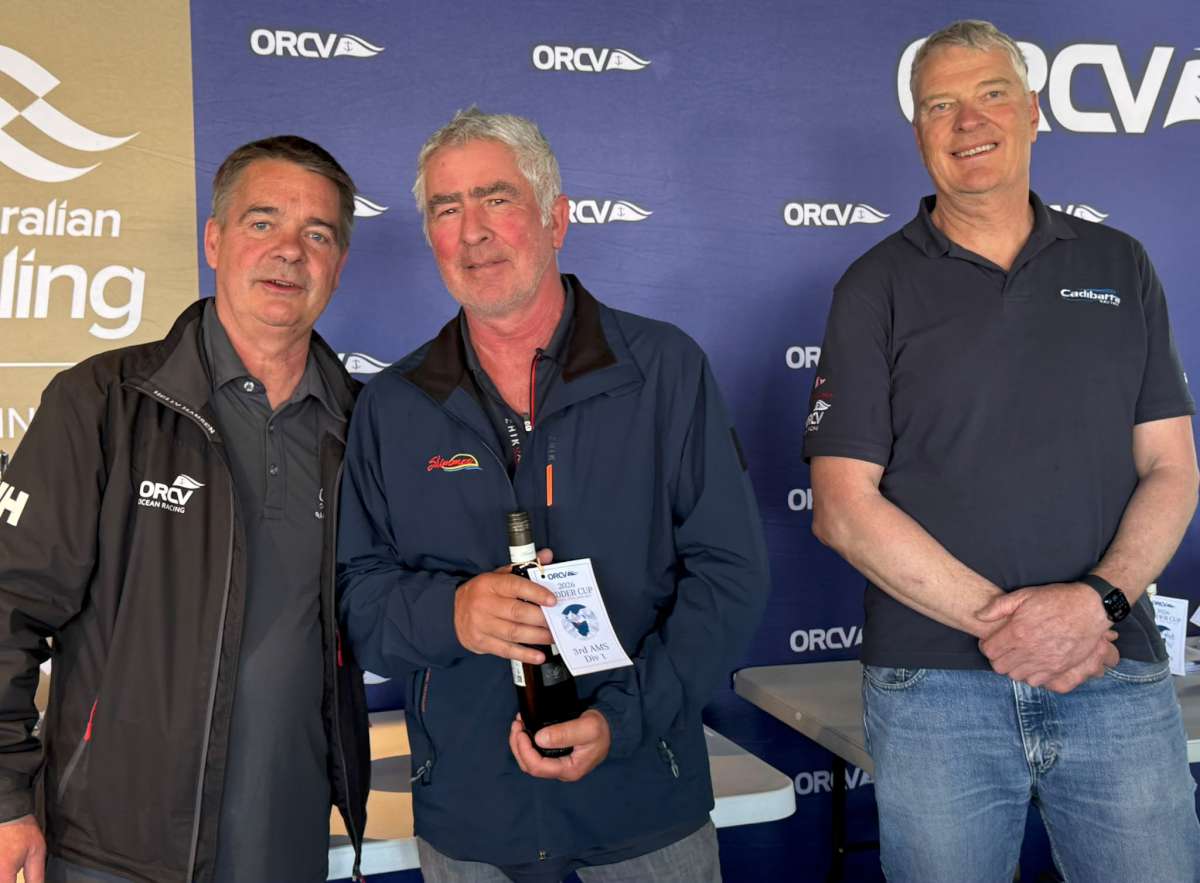
While final prize winners are to be determined, in addition to the line honours winners and placegetters, some divisions were awarded on Sunday at the Mersey Yacht Club. Kraken Sails Toecutter, the Hick 10 skippered by Robert Hick, won on AMS handicap in Division One, with Arcadia, the Archambault 40 RD, skippered by Peter ‘PJ’ Davison in second place, and Shimmer, the Hanse 505 skippered by Steve Twentyman in third.
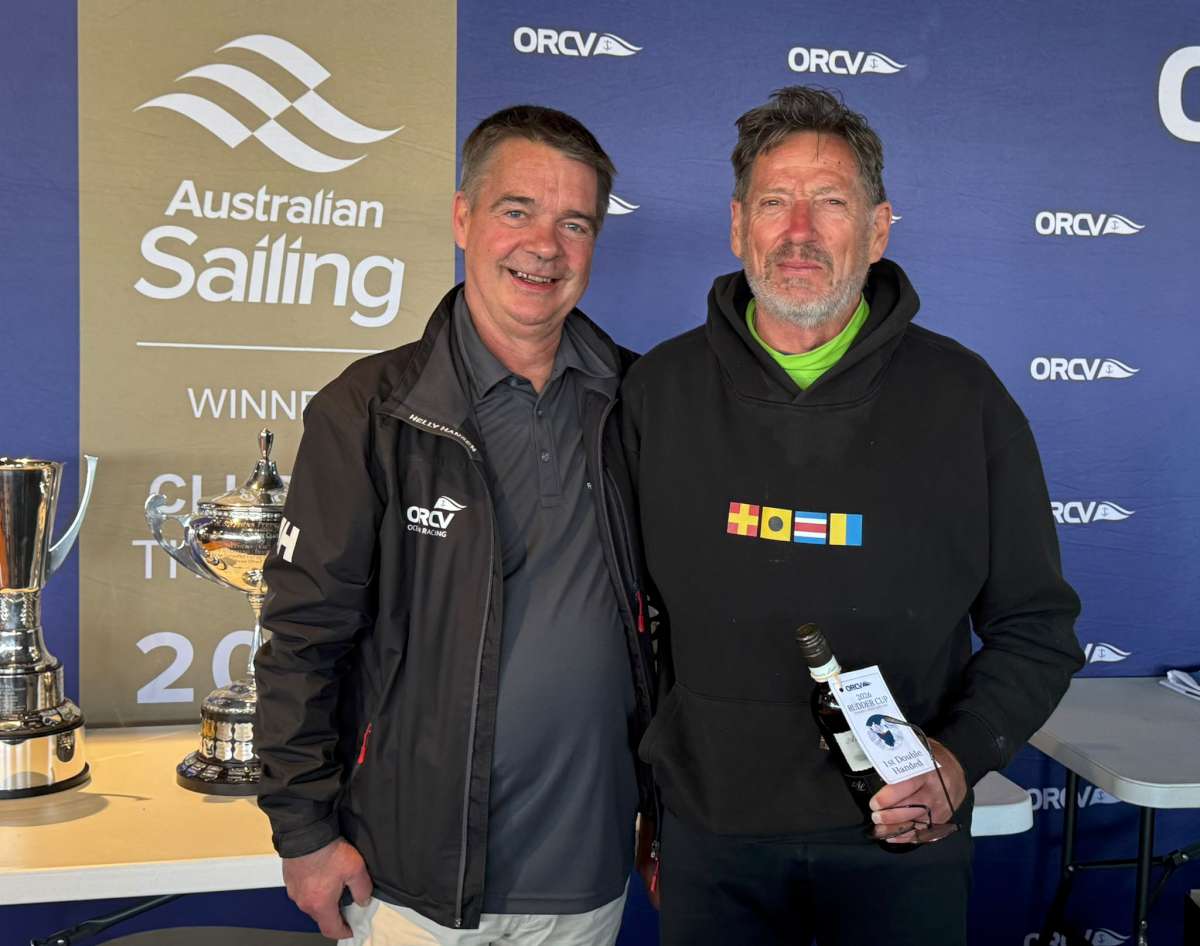
Kraken Sails Toecutter rounded out a great race winning PHS handicap in Division One from White Spirit, the Beneteau First 50, skippered by Cyrus Allen in second place, and Arcadia finishing in third. Spirit of Downunder, skippered by Rick Whitehouse and Marty Bennett, won the double-handed division on their Cameron De Lange 12 metre boat.
In the spirit of sailing partnerships, Cadibarra and White Spirit will be competing in next week’s PDYC Three Hummock Island Race, with both races together forming the series for the newly minted trophy, the Bass Strait Cup, a product of ongoing sailing collaborations between the ORCV and Tasmanian sailing clubs.
For more information about the race and for result updates, go to: www.orcv.org.au
Words and images: Jane Austin /ORCV Media
#OceanRacingClub #orcv_racing #MelbourneToDevonport #SailingNews #RudderCup
More Offshore Sailing stories: Click here