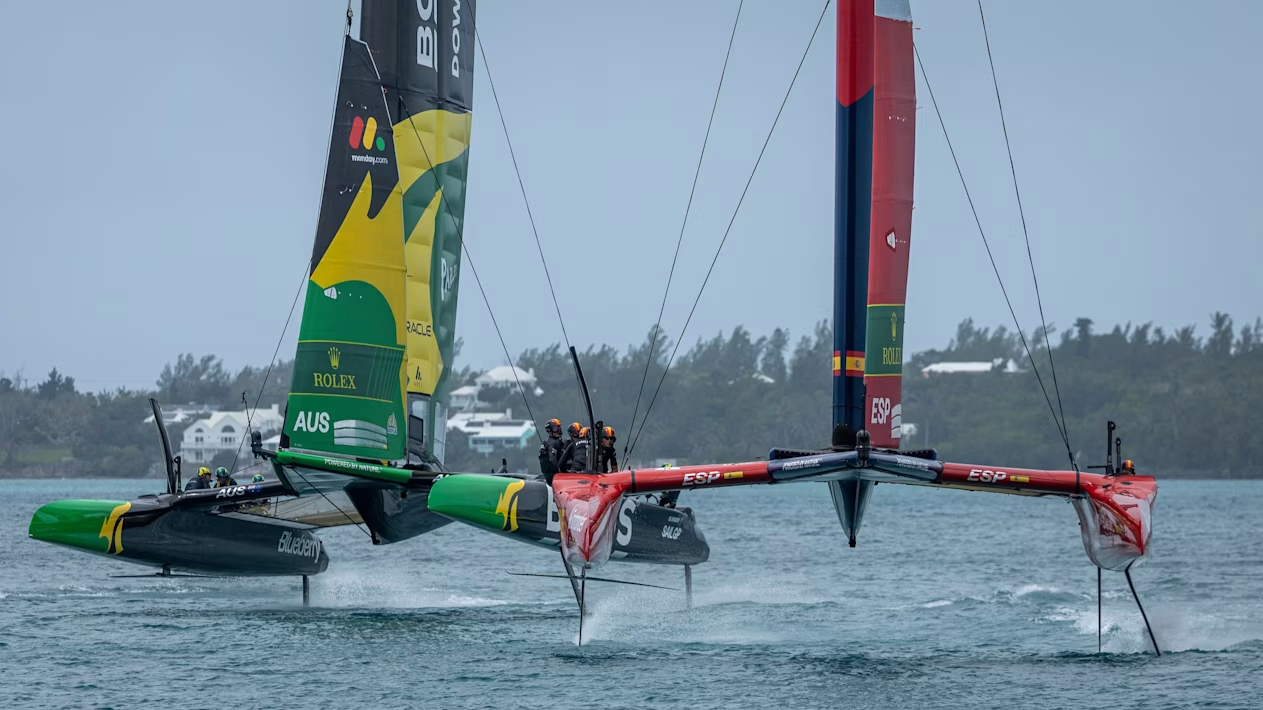
The injury of U.S. driver Taylor Canfield has highlighted a significant risk for SailGP teams that have yet to train and license suitable back-up athletes for key roles.
SailGP CEO Russell Coutts says the events surrounding the U.S. team in Geneva should serve as a wake-up call across the fleet, particularly as the championship continues to expand.
Former Brazil driver Martine Grael was drafted in at the eleventh hour to helm the American F50 after Canfield was ruled out through injury.
Grael had only just announced her departure from the Brazilian team when the call came. A day later, the U.S. team confirmed that its nominated reserve athlete, Harry Melges, was also injured and unable to compete.
It also emerged that Melges was not licensed to race the F50 and would have needed to achieve at least a provisional licence before competing at a SailGP event, even if fully fit.
“Taylor Canfield’s injury was a clear red flag to the teams that they must get more prepared with their back-up squads,” Coutts said.
“It was fortunate the Brazilians were also making changes and Martine was available to step in – although she had only a few days to be introduced to the team and become familiar with their playbook, which was far from ideal.”
Squad depth becoming increasingly important
A lack of squad depth has caused problems for other teams in the past.
In Season 4, Canada was unable to compete on the second day in Auckland after flight controller Billy Gooderham was injured during the opening day of racing.
More recently, Explora Journeys Swiss driver Sebastien Schneiter announced on social media that he had broken his foot, although he said he expected to be “back to 100% in a few weeks”.
The United States is also not alone in lacking a back-up for one of its key roles. Four teams currently do not have a provisionally licensed reserve driver: the U.S., Explora Journeys Swiss, D.S. Automobiles France and Germany Deutsche Bank.
All other teams have provisionally licensed back-up drivers, while NorthStar Canada is the only team with two fully licensed drivers – Giles Scott and wing trimmer Paul Campbell-James.
“Some teams have been working on their backup plans for driver, wing trimmer and flight controller in particular – it’s a big focus for all teams for the rest of this season and next so they’re ready to compete should one of their key athletes become sick or injured,” Coutts said.
Coutts believes this is part of what he describes as “the start of a new world” for SailGP, driven by private ownership and an increasingly professional approach to team management.
“Now that most teams have got major sponsorship and professional investors, the expectation is that they should be ready to race and covered for all eventualities by building up their squads.”
Even the leading teams face the risk
Coutts said even the season’s top two teams, Bonds Flying Roos and Los Gallos, are not immune.
“They’re both super strong with their top line up, but I’m not sure how much depth either of those teams have got at this stage,” he said.
“If one of their key players got injured or sick, it would likely have a dramatic impact on their performance.”
The Canfield situation is expected to place greater emphasis on developing and training new athletes and on how teams manage their overall squads.
Coutts believes that should “accelerate opportunities for young, up-and-coming athletes”, something he sees as important for the future of the sport.
“There is a good number of hugely talented, young athletes, both male and female, capable of competing at the top level,” he said.
“We shouldn’t be seeing top athletes in their late forties or early fifties racing on these boats. You’d never see that in Formula 1 or most other professional sports.”
More events will put greater pressure on athletes
SailGP’s ambitious growth plans could eventually see the championship expand to more than 20 events in a single season.
Coutts believes such a schedule could make larger squads even more important.
“The same athletes may not be able to compete at their best across that number of events,” he said.
“They may need to be rested at certain stages of the season to remain fresh for the big races towards the end of the season.”
Coutts described the change in team mentality as part of a wider transition that “hasn’t been seen in the sport at this scale before”.
“Professional investors and team owners will demand that the management of their teams take a more professional approach to athlete acquisition and training,” he said.
“I suspect we will see teams putting a lot more effort into scouting, securing and training the next generation of star athletes.”
New training base opens opportunities
Central to that development will be SailGP’s first long-term training base at the American Magic Performance and Innovation Center in Pensacola.
The facility, due to become operational later this month, will give teams the opportunity to test and train outside race weekends for the first time.
Coutts said the base would be “a big factor” in developing new athletes.
“It will allow the training of new athletes which will also put pressure on existing athletes that haven’t been performing to start performing,” he said.
“The shareholders, sponsors and fans of these teams demand results – so there’s far more pressure on athletes and managers to perform than ever before.”
Millions on the line
Prize money is adding another incentive for teams to maximise performance.
So far in 2026, championship leaders the Bonds Flying Roos have won USD $2.72 million and are on course for the overall season points bonus of USD $400,000.
With two events remaining, the Australians have the opportunity to win a further USD $3.2 million, potentially taking their total season prize money to USD $5.92 million.
Second-placed Los Gallos have collected USD $2.16 million so far, despite missing two events due to equipment failure.
Coutts expects the league’s overall prize pool to continue growing alongside SailGP revenues and the number of events.
“It’s going to become an even greater carrot for the future top performing athletes in the sport.”
Read the full article from SailGP here.
#SailGP #BondsFlyingRoos
Interested in seeing more Racing News? Click here
Follow all our SailGP coverage Click here