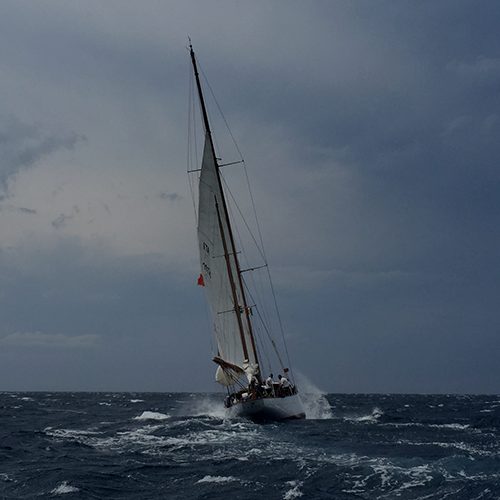
Getting out of a dinghy with no electronic aids will make you a much better sailor.

Back to basics

Persistent Shift

Tony Bull warns against getting too "high tech" at the expense of basic sailing skills.

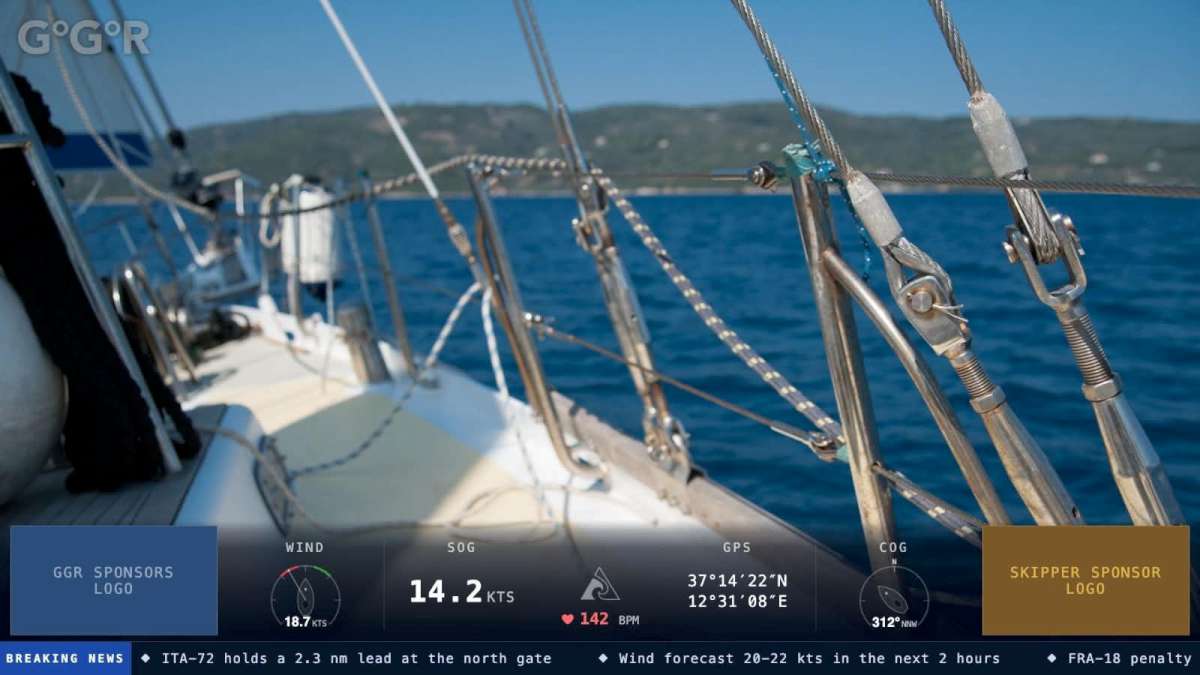
We have a lot of technology to help us sail boats. When we look at the recent America’s Cup we see not only an absolute showcase of sailing engineering but also a vast amount of information being collected for use by the sailors themselves.

Watching James Spithill, the skipper of BMW Oracle, resplendent in a microphone helmet with a back pack of paraphernalia all wired up, he resembled a character from a sci-fi flick more than a helmsman. His weatherman stayed on board right up to the starting sequence, gathering information on the wind shifts and wind pressure models before jumping into the water prior to the warning signal. He and the weight involved in having him onboard were then superfluous to requirements.

I have been fortunate enough to sail on some high-end racing boats over the last few years and I am still amazed at how much information we have at our fingertips. When organising a start plan, we have a man with computer tablet in hand telling us not only the time to go but the time from the line at current speed. He is also constantly updating the favoured end of the line as the wind shifts occur.

Once started, we are kept informed on the wind shifts and their trend and regularity. Approaching marks we can find out how far off the layline we are and the preferred exit course once around the mark, and likely sail choice. On top off all this we can update what is happening at the various weather stations in the region and gain an informed opinion on what is likely to occur.

This is such a far cry from the early days for most of us.  At least from mine, sailing in a variety of clapped out dinghies with the only assistance from a pair of wind ribbons on each side shroud, usually made from the tape of an old audio cassette.  But if you ask any of the great sailors about their skills they will tell you that they were honed by the early years – sailing very basic craft and relying on sensory skills that were developed on the course. This innate skill level is what sets them apart from others as the elite of the sport.

I was reminded of this recently in my annual foray into the world of dinghy sailing in the Geelong Masters regatta.  This regatta has been staged the last two years and as it is located on my backdoor step, it is ideal for a bit of a hoot and a sail around in something different. Recruiting Simon Dodds as crew, with whom I had sailed Dragons decades ago, we were fortunate to gain access to a new Envy Dinghy. It proved to be a good choice as it was suitably sedentary for my 50+ years and as our first outing was to be the invitation race, it was preferable to have something not too testing.  

I finished that race with bloody knees from the non-skid on the cockpit floor, and blistered hands from the mainsheet.  I had a great deal of trouble playing the main and steering, as my primary involvement with sheets and lines over the past couple of seasons had been to occasionally throw off a runner tail! But we had stayed upright and so were ready to go, after the addition of a wetsuit with reinforced knees and a new pair of gloves.

It turned out to be a really fun week of sailing. I was amazed at how much we improved over the course of the week. By the end of the regatta we were roll tacking, which was a long way removed from our first race efforts. As our confidence grew so our race strategy expanded, we were able to place the boat in confined spaces and dip and tack at will. But the biggest improvement came in our tactics and playing the shifts. Without a compass or even a masthead wind indicator, we just concentrated on looking at the water and the angles of the other competitors. The longer the week went the better we got. It was quite refreshing to sail on feel only, and far more gratifying when your “gut hunches” worked out.

With all this technology in yachting it is easy to forget how much fun it is to go sailing in its basic form. With a tiller, a sheet, a set of telltales and the thrill of being so close to the water. It is not only a lot of fun but makes us much better sailors.

Too many sailors have developed a reliance on instrumentation. We should always set up our boat with what feels right and then use the mechanical aids as a guide to refining our trim. Set up and sail the boat for the conditions and use the instrumentation as reassurance. If a boat feels “right” it usually is pretty close to the money. I have never been on a boat that feels uncomfortable in its setup that is fast.

Remember to never use your readouts as a snapshot. They have to be monitored over a period of time to gain an accurate indication. One of the biggest mistakes I see is a helmsman chasing the target boat speeds. You should always just sail as well as you can and the targets will come. If you remain a touch slow then some adjustment is required.  Aggressively chasing the speeds will usually result in over-steering and less than optimum VMG.

Sailing a boat by feel through the helm and visual observation of the sails and sea state is much faster. I often observe a boat which is slowed down by a bad wave or stalls a bit through a header or sailing too close to the wind. The effect on the boat is instantaneous, but can be delayed on the boat speed readout by up to 7-8 seconds. If the steerer and trimmers are concentrating solely on their instruments then by the time it registers the slow period will be prolonged significantly.  If they react to the soft feel of the boat and the tell-tales response straight away, then the speed loss will be only a minor blip. Failure to react immediately will mean a further decrease in speed which then requires a concerted and lengthy effort to build back up to pace. This can cost you minutes around the course.

So get into developing a natural feel to your sailing. We can’t all go and jump into a dinghy (although it is a good idea) but we can do some drills to improve our skills. Sail some races or train with the instruments turned off. The helmsman can sail blindfolded or eyes shut (preferably not in a race) to develop some feel for the boat. Sail with the whole crew ignoring the readouts except for one crew commenting now and then. Don’t sail to your instruments – let them just be an aid to help you sail.

I am quite sure that James Spithill, under all that equipment, was simply sailing the boat and being told by all that paraphernalia that he was right on the money.

Now perhaps if we should get Messrs Ellison and Bertarelli out there in Envy Dinghies!

latest comments

1:43PM "Cap'n Jack, I think you are being a tad too hard on the Watts. There is a saying that the Lord looks after sai..."
Cherylle on Watt Sailing Adventure: Por...
7:44PM "In 40 years of sailing I’ve never requested help. Never rung triple 000. Even though I’ve now sailed tens of t..."
Cap'n Jack on Watt Sailing Adventure: P...


Mysailing on Twitter